This one pan lemon garlic salmon is buttery, flaky, and on the table in 20 minutes with the asparagus cooked right alongside it. ♡
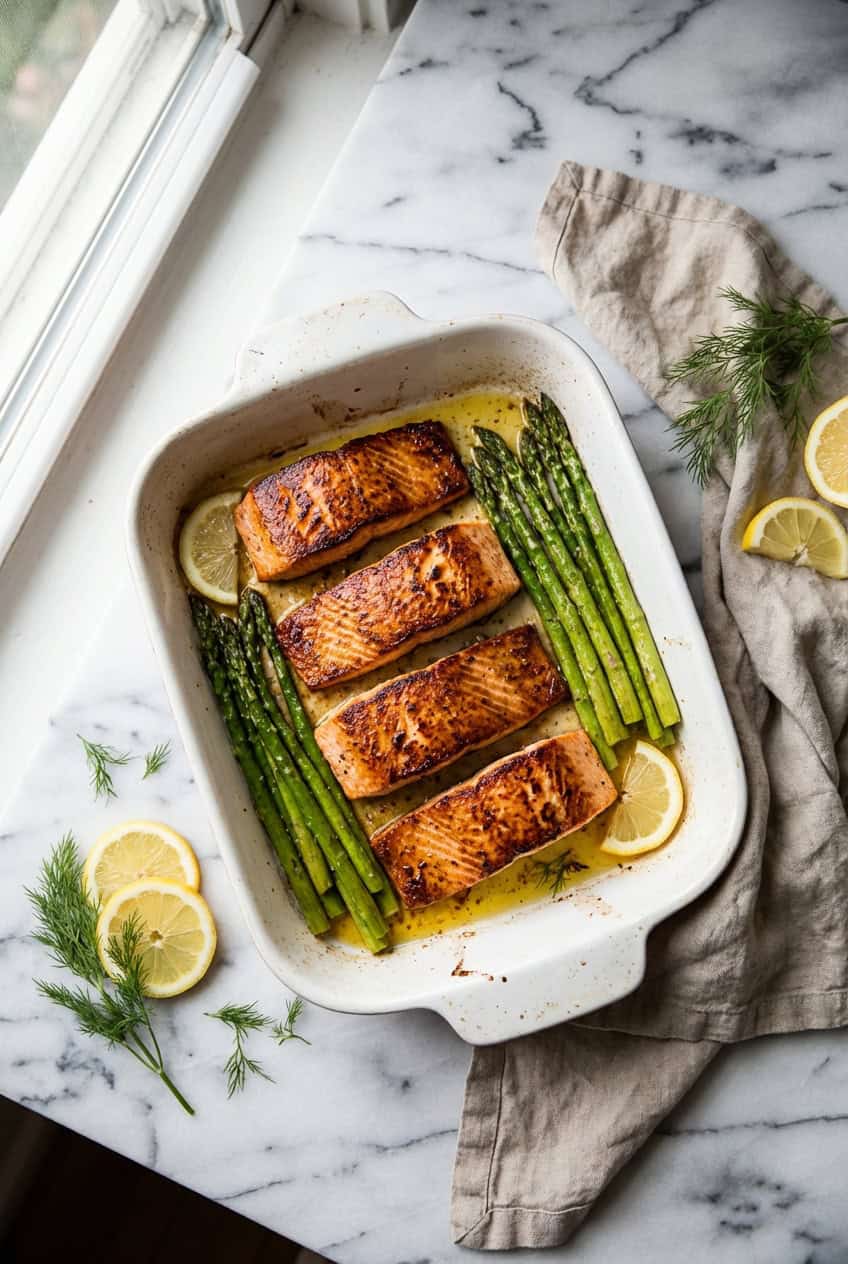
Everything goes on one sheet pan — asparagus on the sides, salmon in the middle, garlic butter drizzled over everything. By the time the salmon flakes perfectly, the asparagus is tender-crisp and the whole pan smells incredible. Sheet pan dinners are the weeknight dinner I keep coming back to.
Arrange, drizzle, and bake. Let’s make it together.
Ingredients
One Pan Lemon Garlic Salmon
- 4 salmon fillets (6 oz each)
- 1 lb asparagus, tough ends trimmed
- 3 tablespoons butter, melted
- 3 cloves garlic, minced
- 2 tablespoons lemon juice
- 1 teaspoon lemon zest
- 1 tablespoon olive oil
- 1/2 teaspoon Italian seasoning
- Salt and pepper to taste
- Fresh dill or parsley and lemon slices for serving
How to Make One Pan Lemon Garlic Salmon
- Preheat. Set your oven to 400°F. Line a large sheet pan with parchment paper.
- Mix. Stir together the melted butter, minced garlic, lemon juice, lemon zest, and Italian seasoning in a small bowl.
- Arrange. Toss the asparagus with olive oil, salt, and pepper and spread it along the edges of the pan. Place the salmon fillets skin-side down in the center, leaving space between them.
- Drizzle. Spoon the garlic lemon butter generously over each salmon fillet and lightly over the asparagus. Season the salmon with salt and pepper.
- Bake. Roast for 12 to 15 minutes until the salmon flakes easily with a fork and the asparagus is tender-crisp. The salmon should be just opaque in the thickest part.
- Serve. Top with fresh dill or parsley and arrange lemon slices alongside.
Tips
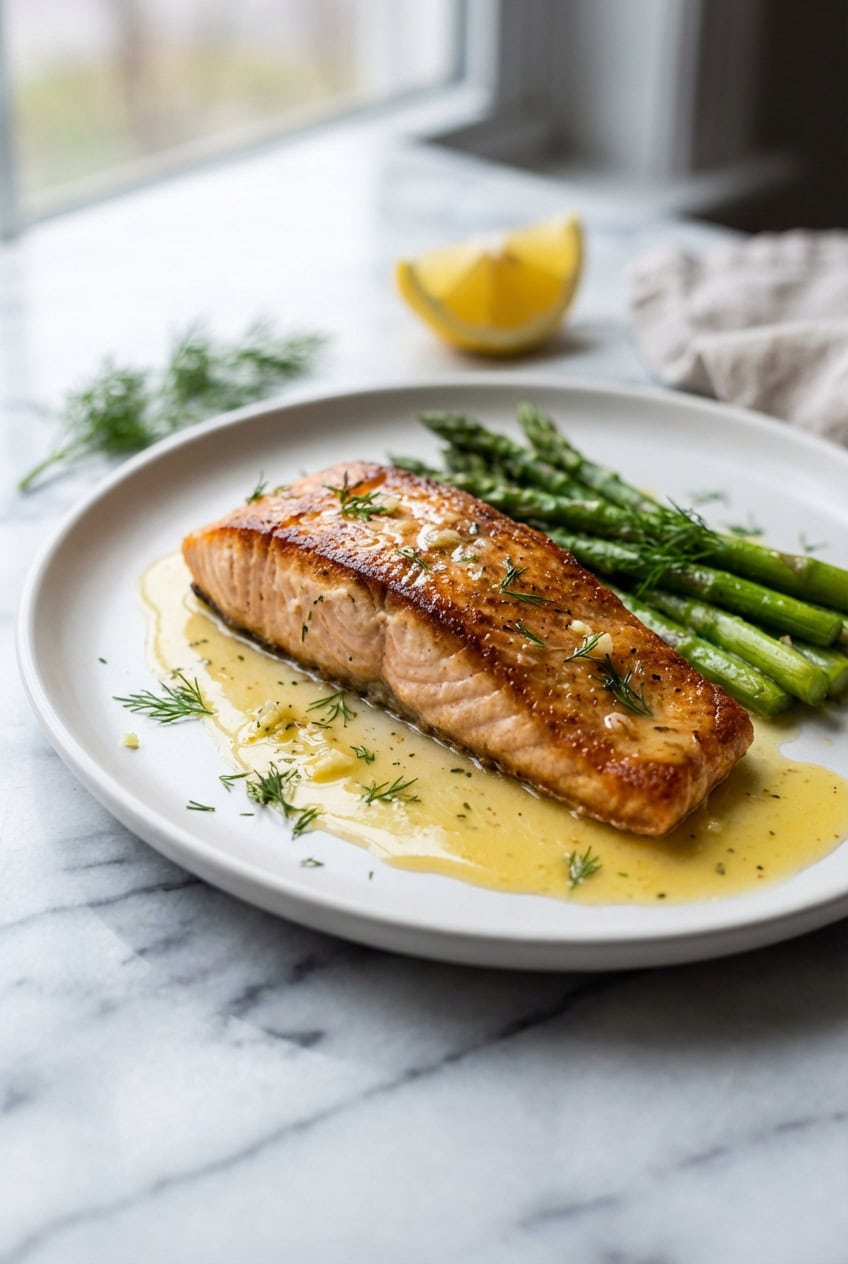
- Don’t overcook the salmon. It’s done when it flakes easily and the thickest part is just opaque. If you wait until it looks fully white all the way through, it’s overcooked.
- Pat the salmon dry before seasoning. Moisture on the surface prevents proper caramelization.
- Use room temperature salmon. Cold salmon from the fridge takes longer and cooks less evenly.
Variations
- Honey lemon version: Add 1 tablespoon of honey to the garlic butter for a sweet glaze.
- Cajun spiced: Swap Italian seasoning for Cajun seasoning and skip the lemon zest.
- Broccoli instead of asparagus: Works just as well, just cut into similar-sized florets.
FAQ
How do I know when salmon is done?
The salmon is done when it flakes easily with a fork and the thickest part is just turning opaque. For medium doneness, the center should still be slightly translucent. Internal temperature should be around 145°F.
Can I use frozen salmon for this recipe?
It’s best to use thawed salmon for even cooking. If using frozen, thaw it in the fridge overnight or in a sealed bag in cold water for about 30 minutes before cooking. Pat it very dry before seasoning.
Do I need to remove the skin from the salmon?
No, bake it skin-side down. The skin protects the bottom of the fillet and keeps it moist. It peels off easily after cooking if you don’t want to eat it.
What other vegetables work on the same pan?
Cherry tomatoes, green beans, zucchini, and broccoli all roast well alongside salmon. Choose vegetables that cook in a similar time frame so nothing burns or undercooks.
Can I use a different type of fish?
Yes. This recipe works well with any firm fish like cod, halibut, or sea bass. Adjust cooking time based on thickness. Thinner fillets may only need 8 to 10 minutes.
One Pan Lemon Garlic Salmon
Buttery garlic lemon salmon baked on a sheet pan with asparagus for a 20-minute weeknight dinner
Ingredients
Method
- **Preheat.** Set oven to 400°F and line a sheet pan with parchment.
- **Mix.** Combine melted butter, garlic, lemon juice, lemon zest, and Italian seasoning.
- **Arrange.** Spread asparagus on the edges, place salmon skin-side down in the center.
- **Drizzle.** Spoon garlic lemon butter over salmon and asparagus. Season with salt and pepper.
- **Bake.** Roast 12 to 15 minutes until salmon flakes easily and asparagus is tender-crisp.
- **Serve.** Top with fresh herbs and lemon slices.
Notes
- Pat salmon dry before seasoning for the best texture.
- Let salmon come to room temperature before baking for even cooking.
- The salmon is done when it flakes easily and the center is just opaque.
- Let salmon come to room temperature before baking for even cooking.
- The salmon is done when it flakes easily and the center is just opaque.