Chewy glass noodles stir-fried with colorful vegetables, beef, and a sweet soy sesame sauce.
Why This Korean Japchae Noodles Works
Simple ingredients, smart technique. This recipe relies on a few key moves that transform everyday ingredients into something that tastes way more special than the effort involved.
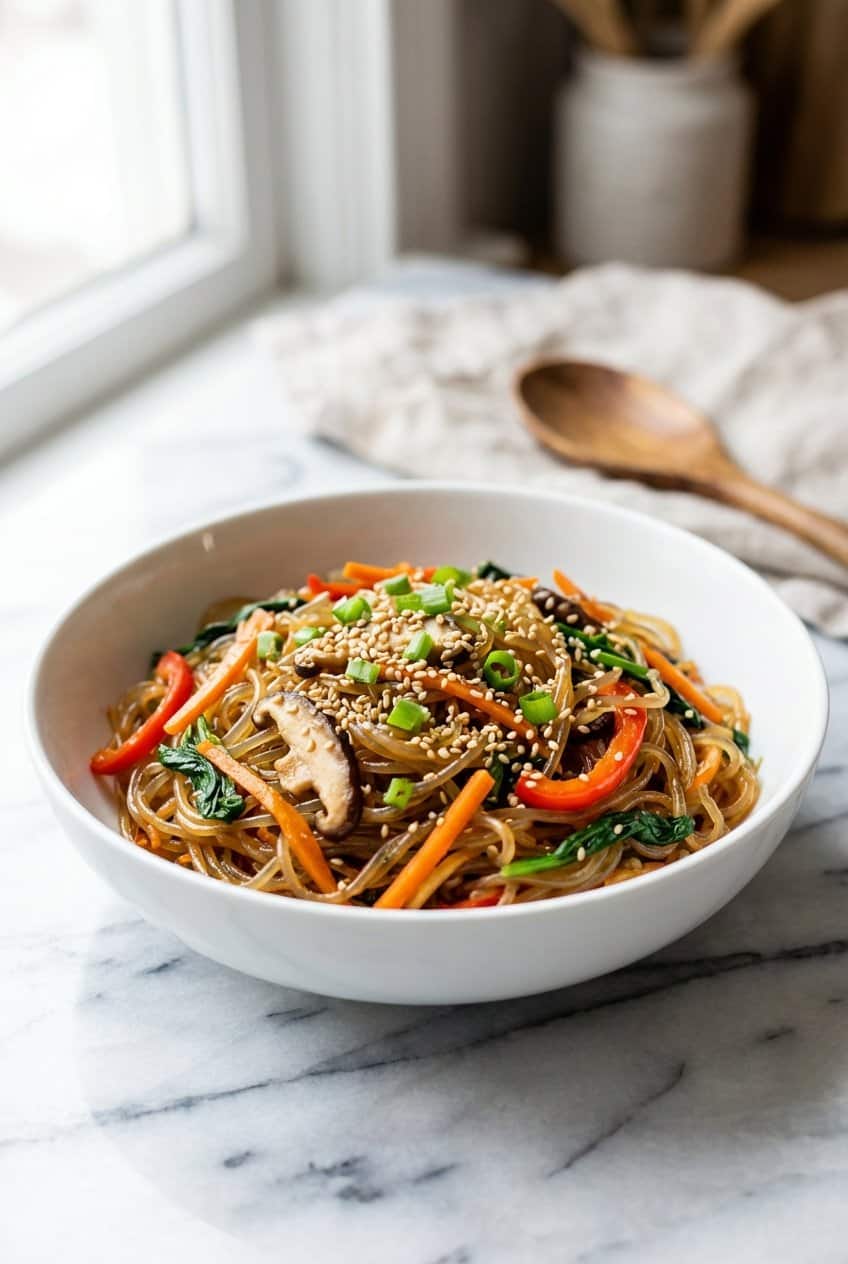
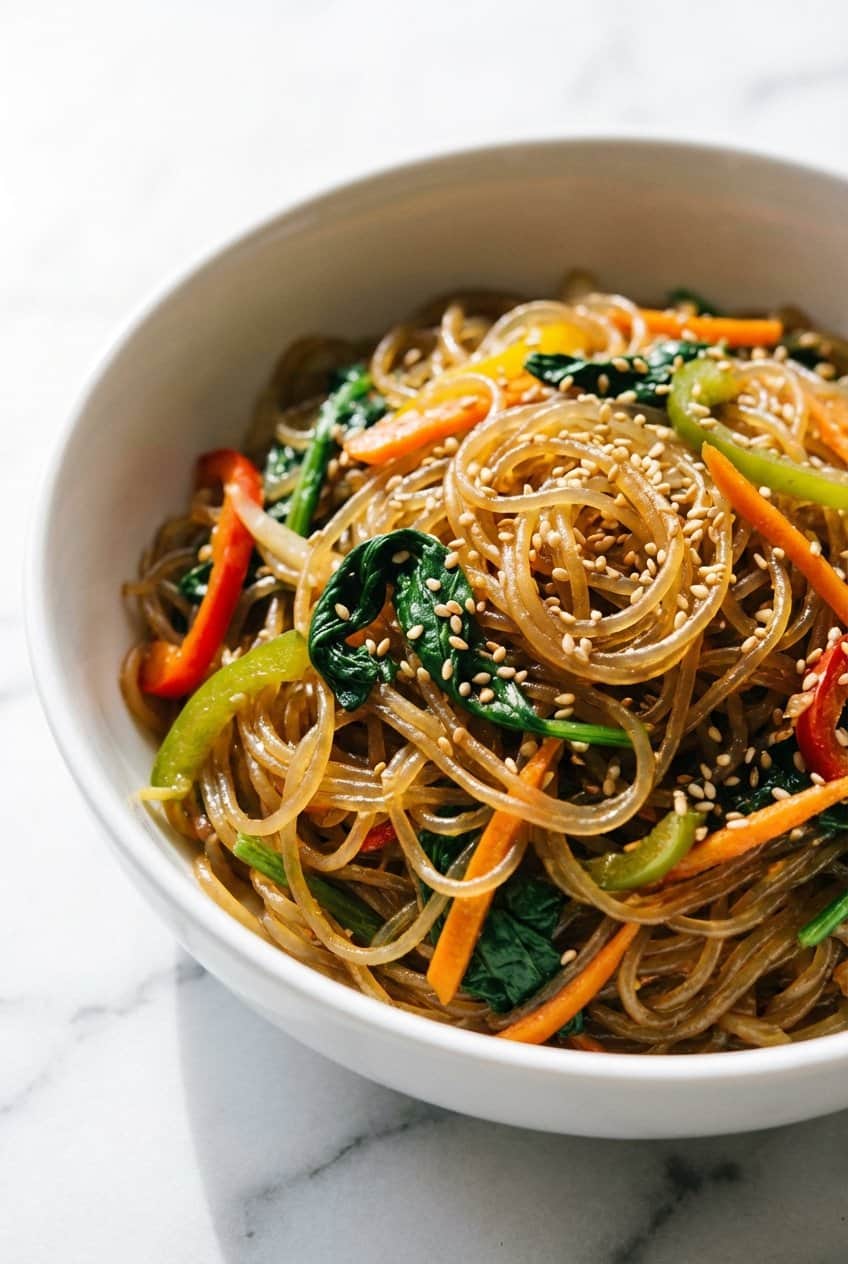
Japchae is one of Korea’s most beloved dishes because the springy sweet potato noodles have a texture unlike anything else. The simple soy-sesame sauce coats every strand, and the mix of vegetables gives you color, crunch, and nutrition in every bite. This Korean glass noodle recipe is a keeper.
Soak your noodles and start slicing those vegetables. Let’s make it together.
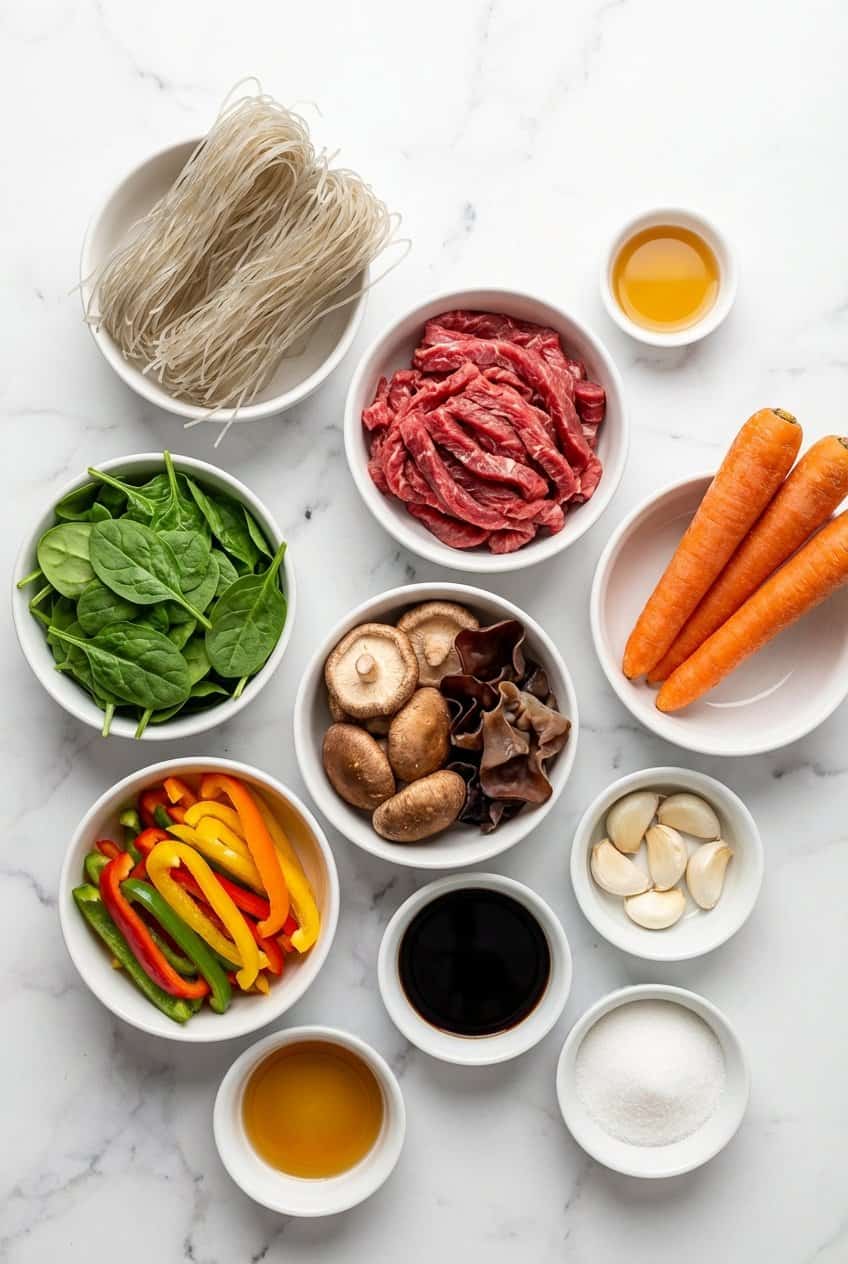
Ingredients
Korean Japchae Noodles
- 8 ounces sweet potato glass noodles (dangmyeon)
- 6 ounces beef sirloin, thinly sliced
- 2 cups spinach
- 1 carrot, julienned
- 1 red bell pepper, sliced thin
- 4 shiitake mushrooms, sliced
- 3 green onions, cut into 2-inch pieces
- 3 tablespoons soy sauce
- 2 tablespoons sesame oil
- 1 tablespoon sugar
- 2 cloves garlic, minced
- 1 tablespoon vegetable oil
- Sesame seeds for garnish
Optional add-ins:
- Egg strips
- Tofu instead of beef
- Zucchini
- Bean sprouts
How to Make Korean Japchae Noodles
- Soak. Cook the glass noodles according to package directions (usually boil 6 to 7 minutes). Drain, rinse under cold water, and cut with scissors into shorter lengths. Toss with 1 tablespoon of sesame oil.
- Stir-fry. Heat vegetable oil in a large skillet or wok over high heat. Cook the beef for 2 minutes until browned. Add garlic, carrots, mushrooms, and bell pepper. Stir-fry for 3 minutes until tender-crisp.
- Combine. Add spinach and green onions, cooking for 30 seconds until the spinach wilts. Add the noodles, soy sauce, remaining sesame oil, and sugar. Toss everything together over medium heat for 2 minutes until the sauce is absorbed.
- Serve. Transfer to a platter and sprinkle with sesame seeds. Serve warm or at room temperature.
Tips for the Best Korean Japchae Noodles
- Cut the cooked noodles with kitchen scissors so they are easier to eat and toss with the vegetables.
- Cook each vegetable separately if you want restaurant-quality results. Home-style all-in-one-pan is faster and still great.
- Sweet potato glass noodles are in the Asian aisle of most grocery stores or at any Korean market.
- Japchae is one of those dishes that tastes just as good at room temperature as it does warm.
- Don’t skip the sesame oil on the noodles right after draining. It prevents clumping.
Fun Variations to Try
- Make it vegetarian by skipping the beef and adding extra mushrooms and tofu.
- Add thin egg strips (cook a beaten egg in a thin layer, slice into strips) on top.
- Use chicken or shrimp instead of beef.
- Add kimchi for a spicier, tangier version.
- Serve over steamed rice for a more filling meal.
You Might Also Love
Can I make Korean Japchae Noodles ahead of time?
Yes, most of the prep can be done in advance. Store components separately and assemble when ready to serve.
How do I store leftover Korean Japchae Noodles?
Store in an airtight container in the fridge for up to 3 to 4 days. Reheat gently in the microwave or oven.
Can I freeze Korean Japchae Noodles?
This recipe freezes well for up to 2 months. Thaw in the fridge overnight and reheat before serving.
Can I make this recipe gluten free?
Check the ingredient list for any gluten-containing items and swap them for gluten-free alternatives. Most swaps work seamlessly.
What can I substitute if I am missing an ingredient?
Check the tips and variations section in the post above for swap ideas. Most ingredients have easy alternatives.
Ingredients
Method
- Soak. Cook the glass noodles according to package directions (usually boil 6 to 7 minutes). Drain, rinse under cold water, and cut with scissors into shorter lengths. Toss with 1 tablespoon of sesame oil.
- Stir-fry. Heat vegetable oil in a large skillet or wok over high heat. Cook the beef for 2 minutes until browned. Add garlic, carrots, mushrooms, and bell pepper. Stir-fry for 3 minutes until tender-crisp.
- Combine. Add spinach and green onions, cooking for 30 seconds until the spinach wilts. Add the noodles, soy sauce, remaining sesame oil, and sugar. Toss everything together over medium heat for 2 minutes until the sauce is absorbed.
- Serve. Transfer to a platter and sprinkle with sesame seeds. Serve warm or at room temperature.
Notes
Cut the cooked noodles with kitchen scissors so they are easier to eat and toss with the vegetables. Cook each vegetable separately if you want restaurant-quality results. Home-style all-in-one-pan is faster and still great. Sweet potato glass noodles are in the Asian aisle of most grocery stores or at any Korean market.
FAQ
What are sweet potato glass noodles?
They are clear, chewy noodles made from sweet potato starch, called dangmyeon in Korean. They have a springy texture that is different from regular pasta or rice noodles.
Can I substitute regular noodles?
You can use rice noodles or thin spaghetti, but the texture will be different. Glass noodles are what make japchae unique.
How long does japchae last in the fridge?
It stores well for 3 to 4 days. The noodles may firm up a bit but a quick toss in a warm pan with a splash of soy sauce brings them back.
Is japchae served hot or cold?
Both. Japchae is traditionally served at room temperature, but it is also great warm right out of the pan. It is commonly served at Korean celebrations and holidays.