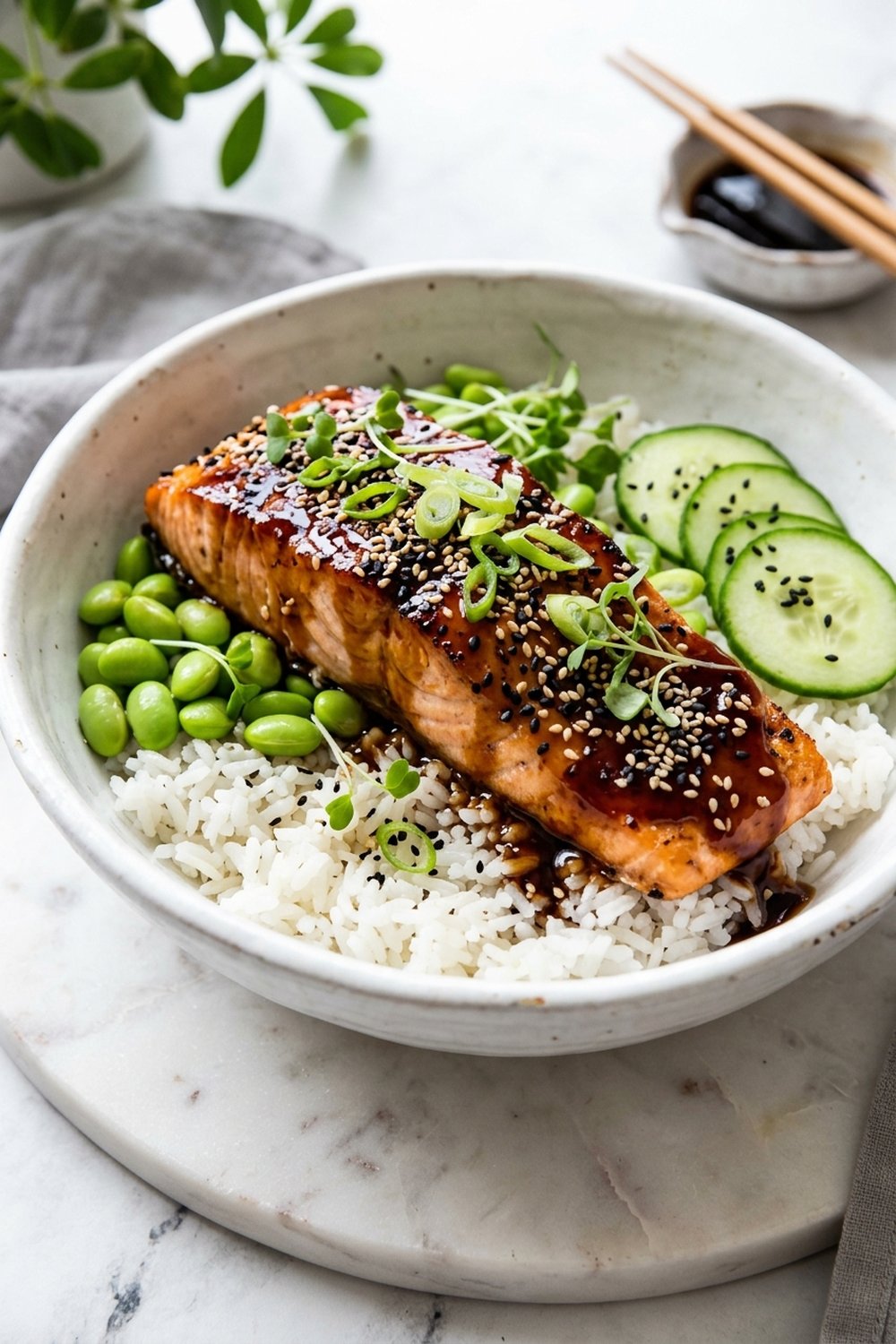
Glossy salmon teriyaki rice bowls with 50g of protein per bowl, edamame and cucumber, ready in 25 minutes. ♡
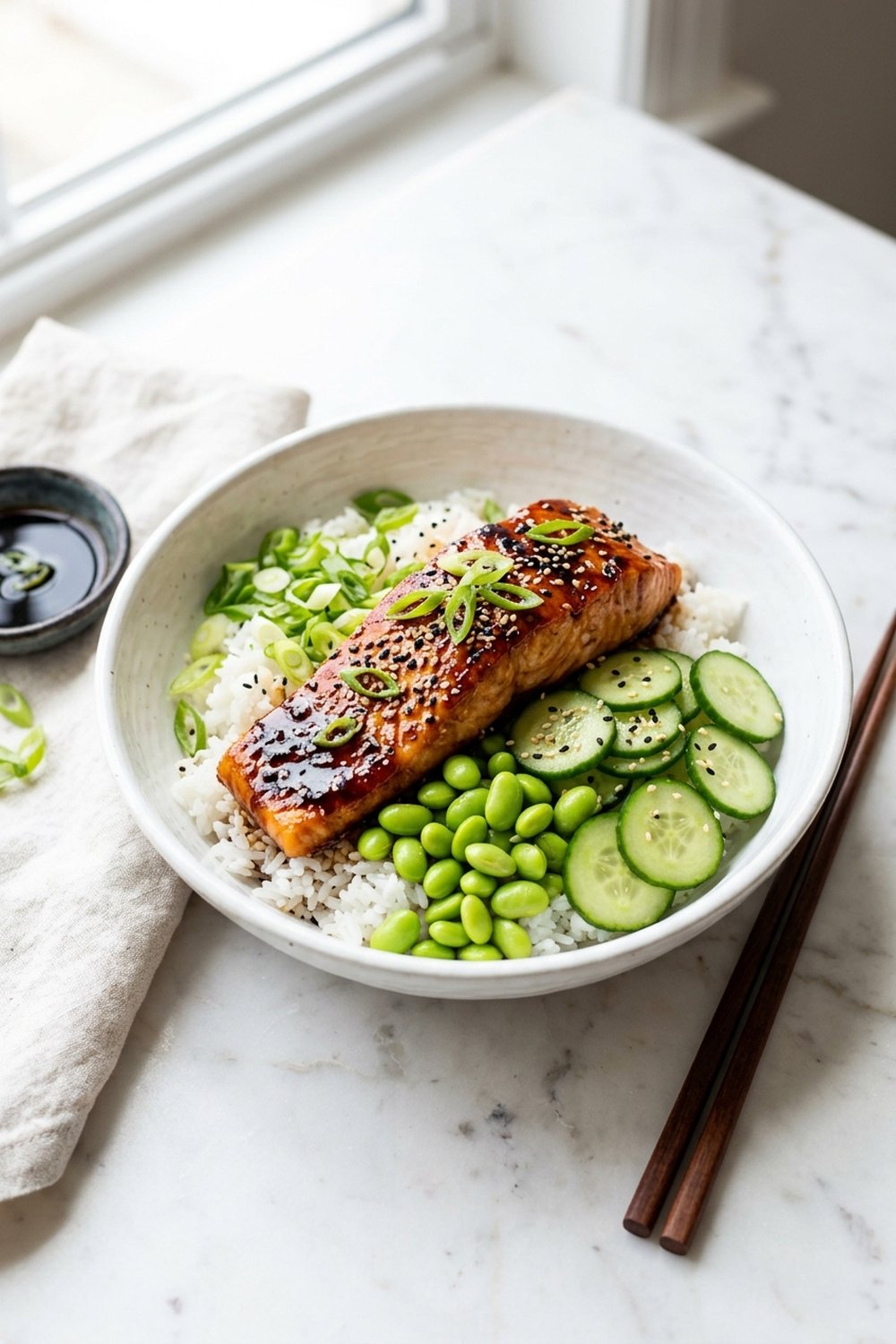
This recipe packs 50g of protein per bowl and hits all the macros in one shallow bowl. Flaky salmon glazes with homemade teriyaki while jasmine rice, edamame, and quick pickled cucumber stack around it. For more ideas, see our Honey Garlic Chicken Thighs.
High protein, high flavor, and the takeout copycat that actually beats the original. Let’s make it together.
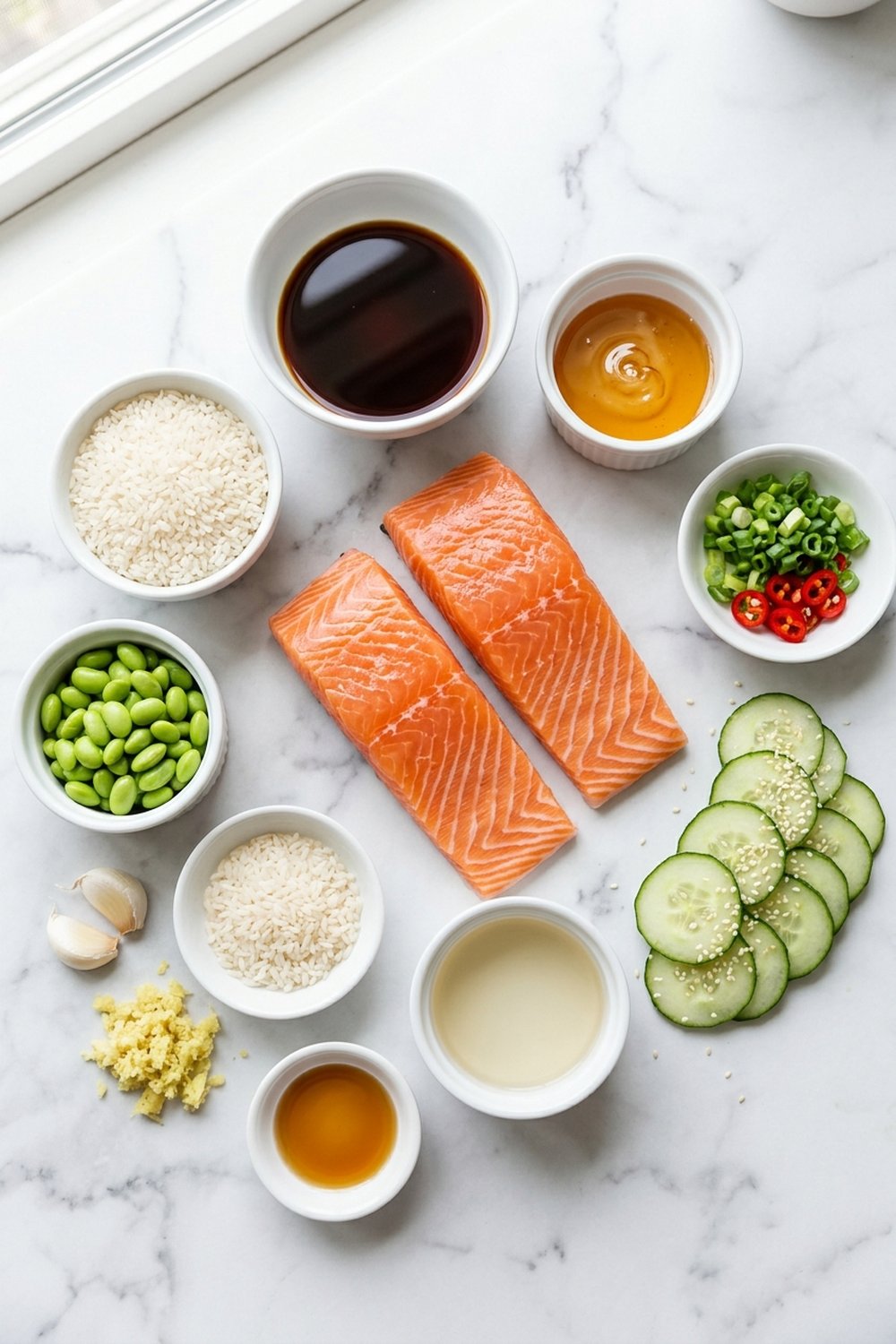
Ingredients
Salmon Teriyaki Rice Bowls
- 4 salmon fillets, 6 oz each
- 1/4 cup low sodium soy sauce
- 3 tbsp honey
- 2 tbsp rice vinegar
- 1 tbsp grated fresh ginger
- 2 cloves garlic, minced
- 1 tsp sesame oil
- 2 cups jasmine rice, cooked
- 2 cups shelled edamame, thawed
- 1 cucumber, thinly sliced
- 2 tbsp rice vinegar, for pickle
- 2 tsp sesame seeds
- 2 tbsp sliced scallions
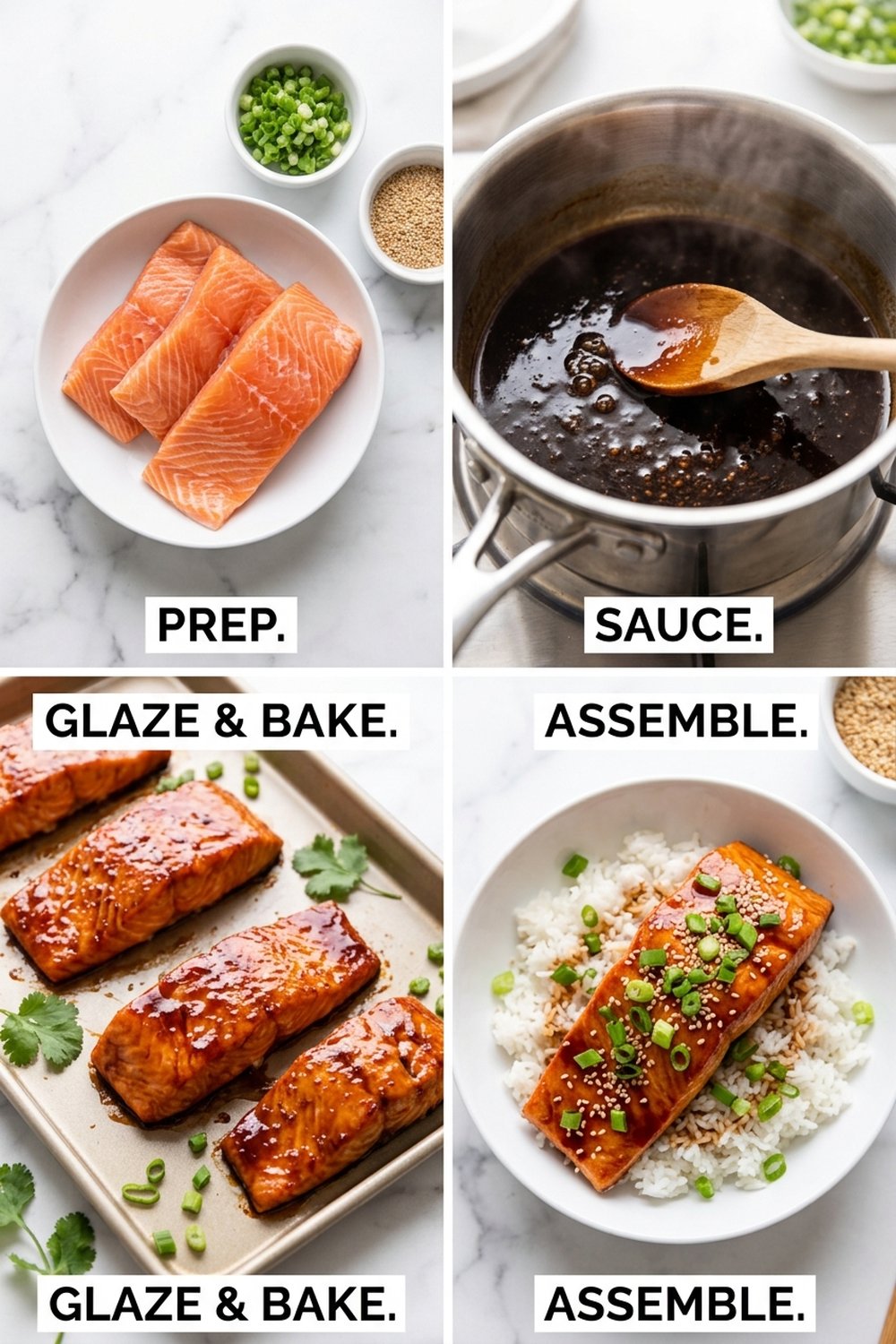
How to Make Salmon Teriyaki Rice Bowls
- **Heat.** Preheat oven to 425F. Line a sheet pan with parchment.
- **Sauce.** In a small saucepan whisk soy sauce, honey, rice vinegar, ginger, garlic, and sesame oil. Simmer 3 minutes until slightly thickened. Set aside.
- **Pickle.** Toss cucumber with 2 tbsp rice vinegar and a pinch of salt. Let sit 10 minutes.
- **Bake.** Pat salmon dry. Place on sheet pan. Bake 10 minutes until just opaque.
- **Glaze.** Brush half the teriyaki over salmon. Broil 1 minute.
- **Assemble.** Divide rice among 4 bowls. Top each with salmon, edamame, cucumber pickle, and extra teriyaki.
- **Garnish.** Sprinkle sesame seeds and scallions. Serve warm.
Why This Recipe Works
6 oz salmon fillet delivers 42g of protein, 1/2 cup shelled edamame adds 9g, and a sprinkle of sesame seeds adds a trace. Each bowl hits a massive 50g protein without protein powder tricks.
Baking salmon on a sheet pan at 425F for 10 minutes produces a tender flaky fillet every single time. This method is more forgiving than pan searing and frees you up to prep the rest of the bowl.
Reducing the teriyaki sauce in a small saucepan for 3 minutes turns a thin soy mix into a glossy glaze that clings to the salmon. Brushing it on at the end keeps the sugar from burning in the oven. For more ideas, see our Ground Turkey Sweet Potato Skillet.
Tips
- Use center cut salmon for even cooking and max protein per fillet.
- Pat salmon dry before baking for better glaze adhesion.
- Rinse jasmine rice until water runs clear for fluffy grains.
- Use frozen shelled edamame. Thaw in hot water 3 minutes.
- Store bowls in airtight containers up to 3 days.
- Meal prep tip: pack salmon and rice separately from pickles.
Variations
- Swap salmon for chicken thighs (reduce to 40g protein).
- Add a soft boiled egg for 6g more protein.
- Use cauliflower rice for a lower carb bowl.
- Swap edamame for avocado for more healthy fats.
- Add a sriracha mayo drizzle for extra heat.
- Top with furikake or nori strips for umami.
Looking for more high protein dinner ideas? Try our Cottage Cheese Breakfast Bowl or Buffalo Chicken Pasta Bake next.
Common Mistakes to Avoid
- Over baking salmon: Pull at 10 minutes. Residual heat finishes cooking.
- Dumping uncooked sauce on salmon: Reduce teriyaki first. Raw sauce never caramelizes.
- Unrinsed rice: Rinse until clear for fluffy rice. Unrinsed is gummy.
- Skipping the pickle: Quick cucumber pickle cuts the richness. Essential to balance.
Salmon Teriyaki Rice Bowls
Ingredients
Method
- **Heat.** Preheat oven to 425F. Line a sheet pan with parchment.
- **Sauce.** In a small saucepan whisk soy sauce, honey, rice vinegar, ginger, garlic, and sesame oil. Simmer 3 minutes until slightly thickened. Set aside.
- **Pickle.** Toss cucumber with 2 tbsp rice vinegar and a pinch of salt. Let sit 10 minutes.
- **Bake.** Pat salmon dry. Place on sheet pan. Bake 10 minutes until just opaque.
- **Glaze.** Brush half the teriyaki over salmon. Broil 1 minute.
- **Assemble.** Divide rice among 4 bowls. Top each with salmon, edamame, cucumber pickle, and extra teriyaki.
- **Garnish.** Sprinkle sesame seeds and scallions. Serve warm.
Notes
Sources: USDA FoodData Central for protein and nutrition data and Harvard T.H. Chan School of Public Health on protein requirements.