Three ingredients, zero cream, and the most silky, peppery, deeply savory pasta you have ever eaten. ♡
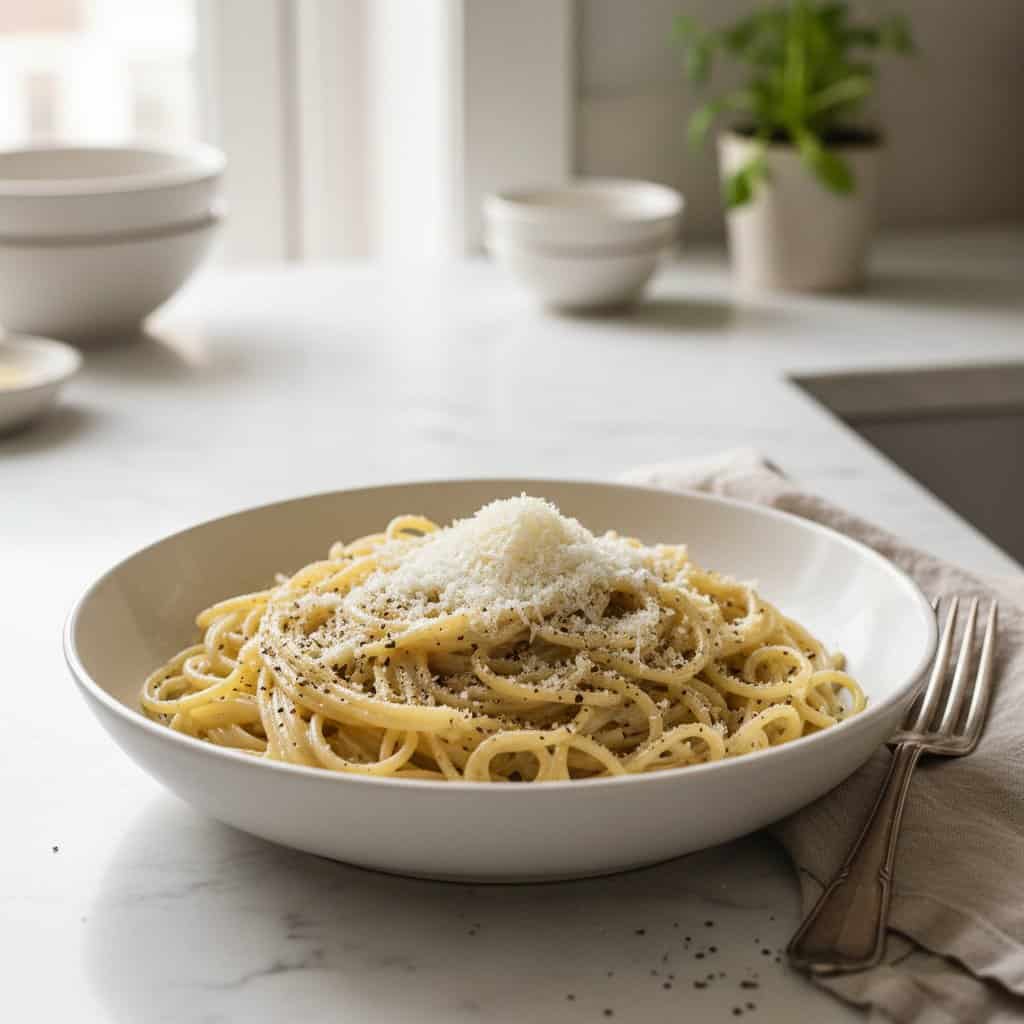
The magic of cacio e pepe is entirely in the technique. The starchy pasta water is what transforms grated cheese and black pepper into a glossy, creamy sauce without a single drop of cream or butter beyond what the cheese brings. Toast the pepper in a dry pan first to bloom its oils, and use the hottest pasta water you can for emulsifying. It sounds simple because it is, but every step matters.
This is the Roman pasta that proves restraint beats complexity every time. Let’s make it together.
Ingredients
Cacio e Pepe
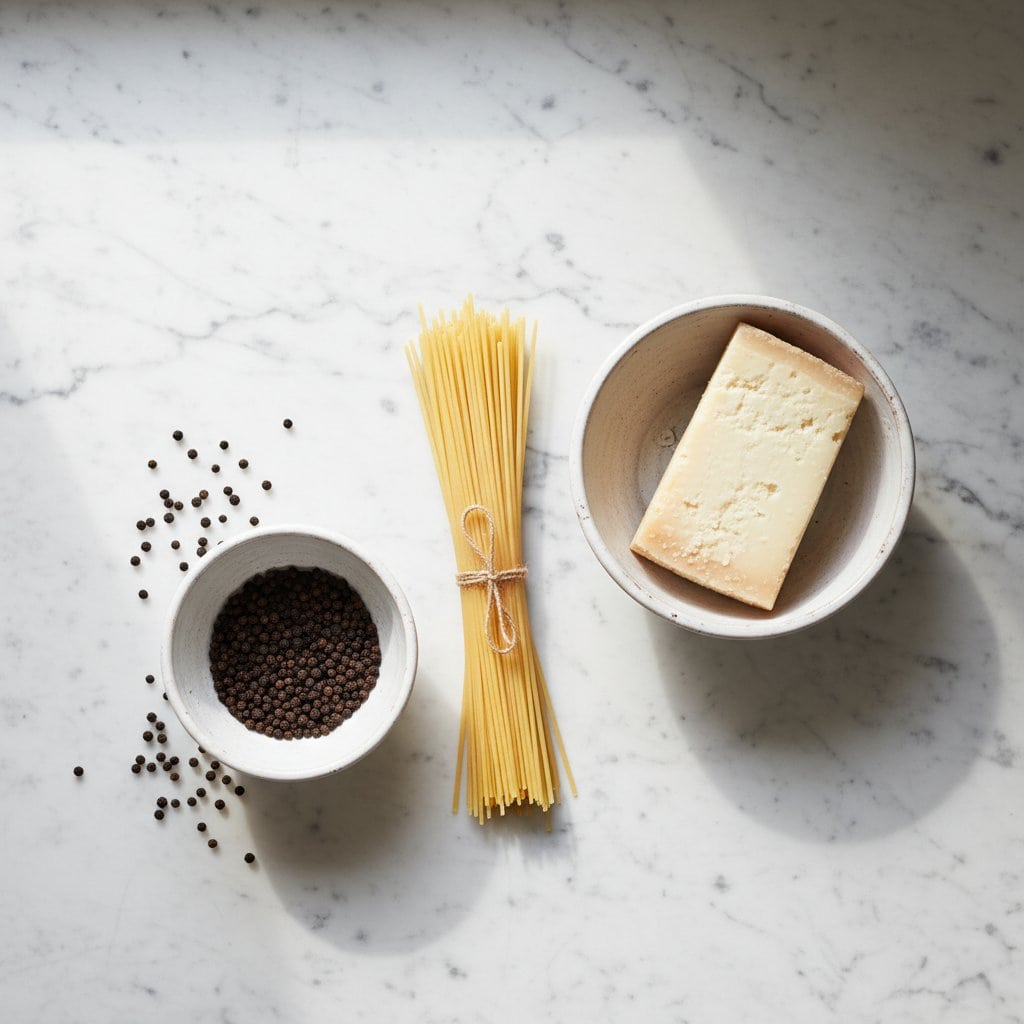
- 400g (14 oz) spaghetti or tonnarelli
- 200g (7 oz) Pecorino Romano, finely grated (plus more for serving)
- 50g (1.75 oz) Parmigiano Reggiano, finely grated
- 2 tsp whole black peppercorns, coarsely cracked
- Salt for pasta water (use less than usual since Pecorino is very salty)
Optional add-ins:
- Guanciale or pancetta for a heartier pasta
- A tiny knob of butter for extra richness
- Extra Parmigiano at the table
- Fresh cracked pepper at serving
- Rigatoni or bucatini instead of spaghetti
How to Make Cacio e Pepe
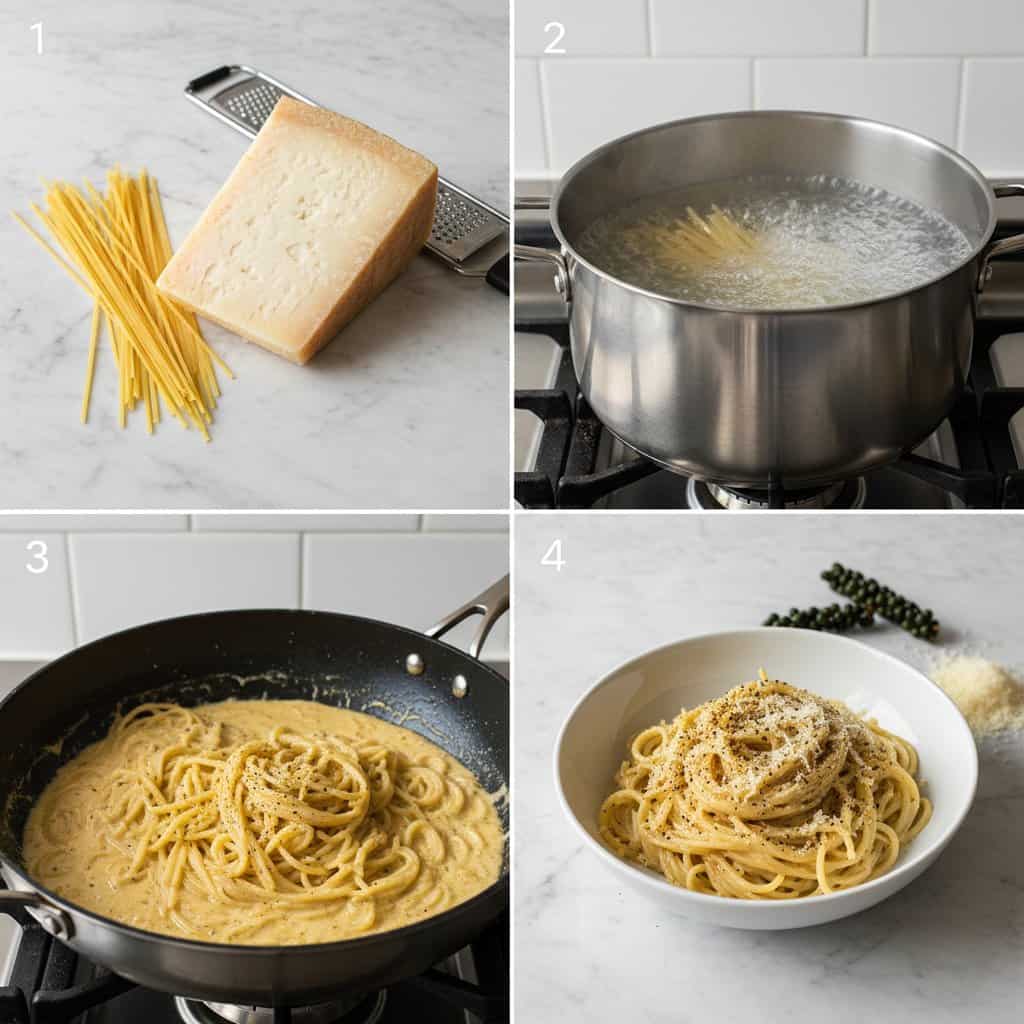
- Toast. Add the cracked peppercorns to a large, dry skillet over medium heat. Toast for 1 to 2 minutes until fragrant and slightly smoking. This blooms the pepper oils and makes the flavor significantly deeper. Keep the pan on low after toasting.
- Boil. Cook the pasta in a large pot of lightly salted water (less salt than usual) until 2 minutes shy of al dente. Reserve at least 2 cups of the starchy pasta water before draining. The starch in this water is essential for building the sauce.
- Bloom. Add 1/2 cup of the hot pasta water to the pan with the toasted pepper. Let it simmer for 1 minute over medium heat until the water takes on the pepper flavor and reduces slightly.
- Toss. Add the drained pasta directly to the pepper pan. Toss aggressively over medium heat for 1 to 2 minutes, adding small splashes of pasta water to keep it loose and moving. The pasta should look very saucy at this stage, not dry.
- Cheese. Remove the pan from the heat completely. Wait 30 seconds for the pan to cool slightly. Add the grated Pecorino and Parmigiano in two or three batches, tossing rapidly and adding small splashes of pasta water between each addition. (Heat is the enemy here. Cheese added to a hot pan clumps immediately. Off the heat and rapid tossing is what creates the glossy emulsion.)
- Serve. Plate immediately in warmed bowls. Top with extra grated Pecorino and a fresh crack of black pepper. Cacio e pepe waits for no one. Eat it right away before the sauce tightens up.
Tips for the Best Cacio e Pepe
- Use a microplane for the cheese. The finer the grate, the faster and more evenly it melts into the sauce. Coarsely grated cheese makes lumps.
- Reserve more pasta water than you think you need. Always save at least 2 cups. You will use more of it than expected and you cannot go back once you drain the pot.
- Cook the pasta slightly underdone. It finishes cooking in the pepper pan and in the hot sauce. If you cook it fully before transferring, it will be overcooked by the time you eat.
- Take the pan off the heat before adding cheese. This is non-negotiable. A hot pan turns cheese into stringy, clumped rubber instead of a silky sauce.
- Work fast and keep tossing. Constant movement and small additions of pasta water are what keep the emulsion together. Stop stirring and it breaks.
- Warm your bowls before serving. Cacio e pepe sauce tightens as it cools. Warm bowls buy you an extra minute or two of perfect texture at the table.
Fun Variations to Try
- Cacio e Pepe with Guanciale: Render cubed guanciale in the pan first and use the rendered fat to replace some of the pasta water for a richer, porky twist.
- Bucatini Cacio e Pepe: Use bucatini instead of spaghetti for a thicker, chewier pasta that holds the sauce in the hollow center of each strand.
- All Pecorino Version: Use only Pecorino Romano for a sharper, saltier, more traditionally Roman result.
- Lemon Cacio e Pepe: Add the zest of one lemon and a small squeeze of juice at the end for a bright, springy riff on the classic.
- Truffle Cacio e Pepe: Finish with a drizzle of truffle oil or a few shavings of fresh truffle for a restaurant-worthy special occasion pasta.
- Rigatoni Cacio e Pepe: The ribbed surface of rigatoni grabs the sauce better than smooth pasta and gives you little pockets of cheesy sauce in every bite.
Cacio e Pepe
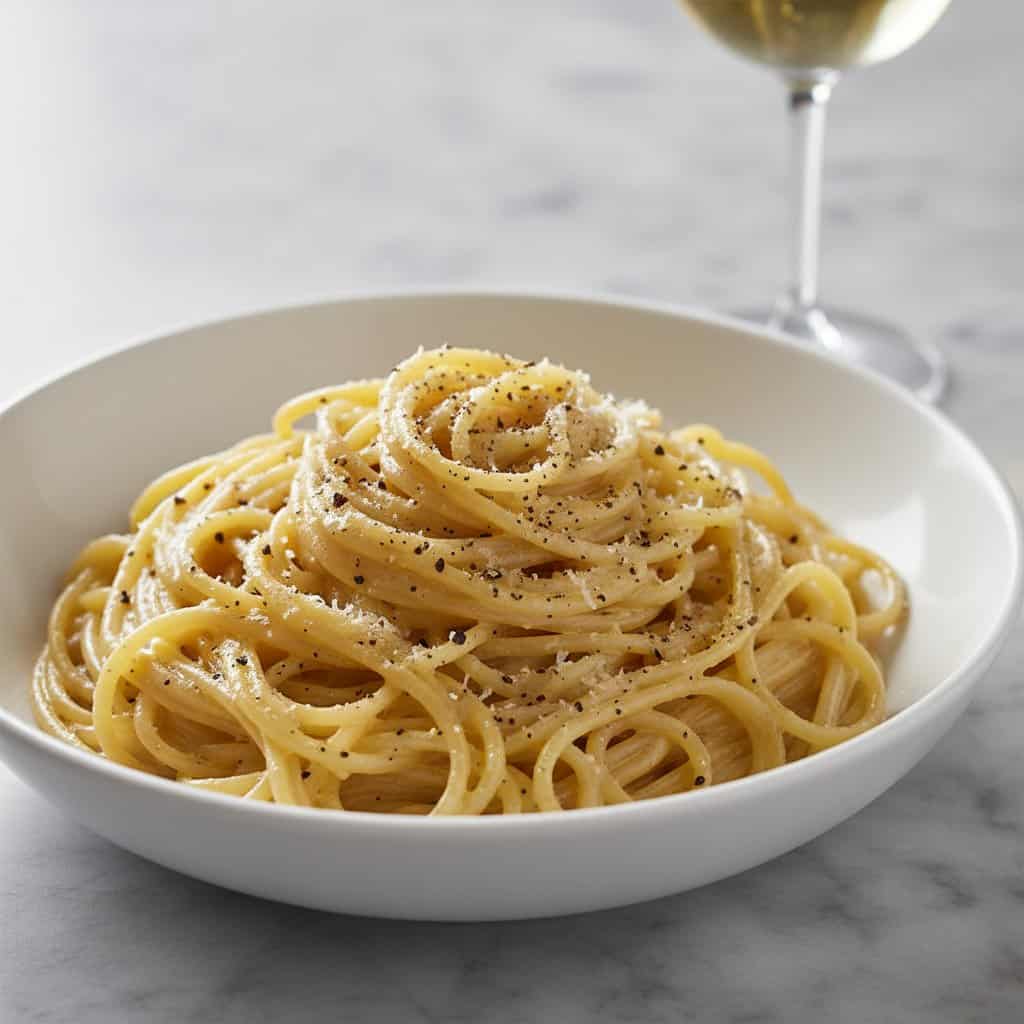
A classic Roman pasta made with just spaghetti, Pecorino Romano, Parmigiano Reggiano, and cracked black pepper emulsified into a silky, glossy sauce without any cream.
Ingredients
Method
- Toast cracked peppercorns in a large dry skillet over medium heat for 1 to 2 minutes until fragrant. Keep the pan on low heat after toasting.
- Cook pasta in lightly salted water until 2 minutes shy of al dente. Reserve 2 cups of starchy pasta water before draining.
- Add 1/2 cup of hot pasta water to the pepper pan. Simmer for 1 minute over medium heat.
- Add drained pasta to the pan. Toss over medium heat for 1 to 2 minutes, adding pasta water in small splashes to keep it loose and saucy.
- Remove pan from heat. Wait 30 seconds. Add grated Pecorino and Parmigiano in 2 to 3 batches, tossing rapidly and adding small splashes of pasta water between each addition until a glossy sauce forms.
- Plate immediately in warmed bowls. Top with extra Pecorino and a fresh crack of black pepper. Serve right away.
Notes
Remove the pan from the heat before adding cheese. A hot pan causes clumping. Add cheese in small batches with rapid tossing and splashes of pasta water between each addition to build the emulsion. Always reserve at least 2 cups of starchy pasta water.
You Might Also Love
Why does my cacio e pepe always clump?
The cheese is hitting a pan that is too hot. Always take the skillet off the heat and let it cool for 30 seconds before adding the cheese. Then add it in small batches with rapid tossing and splashes of pasta water between each addition. Cold cheese plus off-heat pan plus pasta water equals emulsion, not clumps.
Can I use pre-grated cheese from a bag?
No. Pre-grated cheese contains cellulose and anti-caking agents that prevent it from melting smoothly. Always grate whole Pecorino Romano and Parmigiano Reggiano fresh on a microplane right before cooking.
Do I need Pecorino Romano or can I use just Parmesan?
Pecorino Romano is essential for authentic cacio e pepe. It has a sharper, saltier, more pungent flavor that Parmigiano Reggiano alone cannot replicate. The mix of both gives you the right balance. Using only Parmigiano makes a fine pasta but it won’t taste like cacio e pepe.
Why is my cacio e pepe sauce watery?
You used too much pasta water in one addition. Add pasta water a few tablespoons at a time and let it emulsify before adding more. If the sauce is too loose, keep tossing over low heat for another minute to help it tighten.
What pasta shape is traditional for cacio e pepe?
Tonnarelli is the most traditional Roman pasta for cacio e pepe. It is a square-cut spaghetti with more surface area that grabs the sauce. Spaghetti is a widely accepted substitute and the one most home cooks use. Both work well.