Grilled Greek chicken souvlaki skewers with 45g of protein per serving, lemony oregano and ready in 30 minutes. ♡
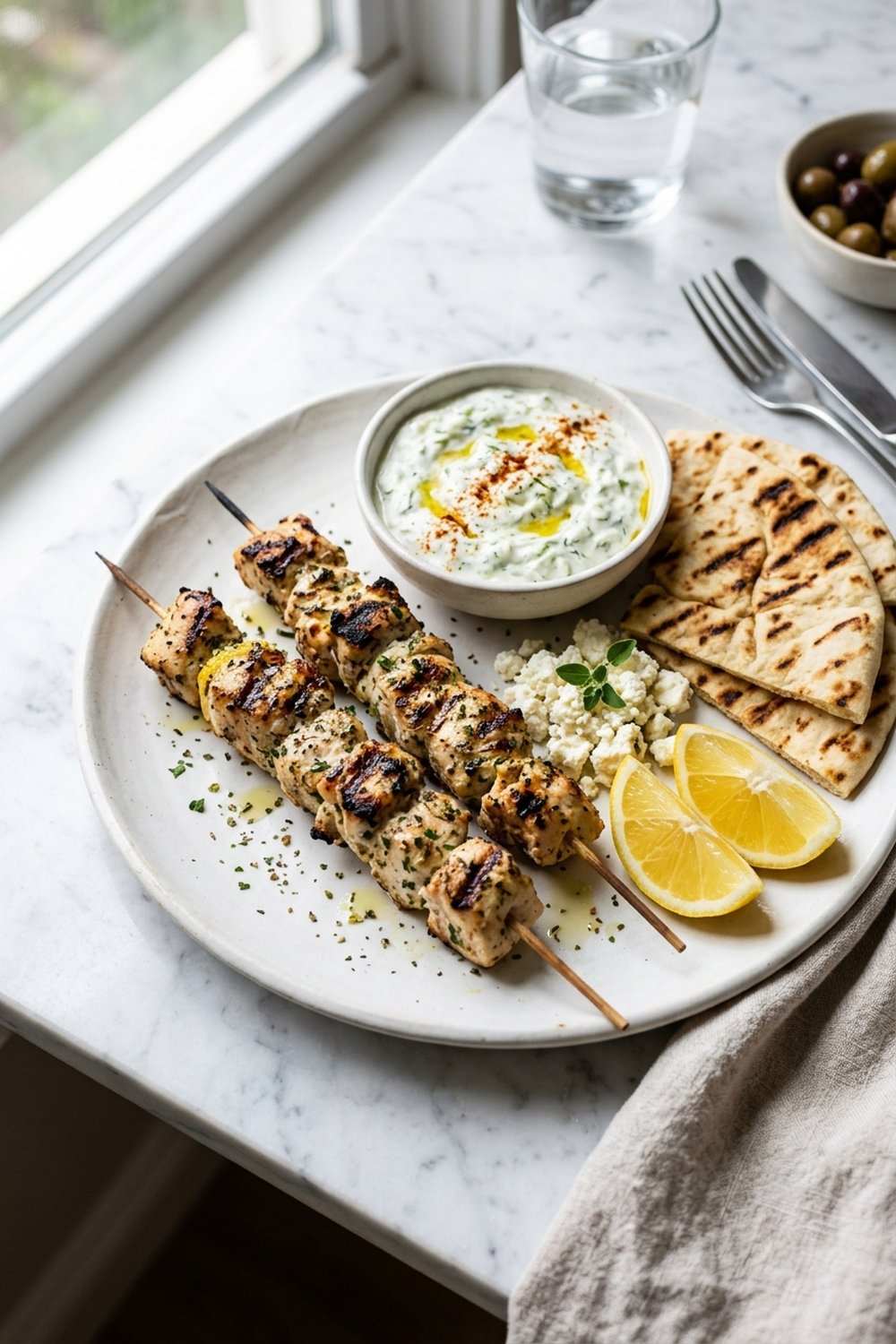
This recipe packs 45g of protein per serving and delivers Greek taverna magic in your own backyard. Cubed chicken marinates in lemon, olive oil, oregano, and garlic then chars on the grill into juicy kotopoulo souvlaki skewers. For more ideas, see our Honey Garlic Chicken Thighs.
High protein, Mediterranean bright, and perfect with tzatziki and warm pita. Let’s make it together.
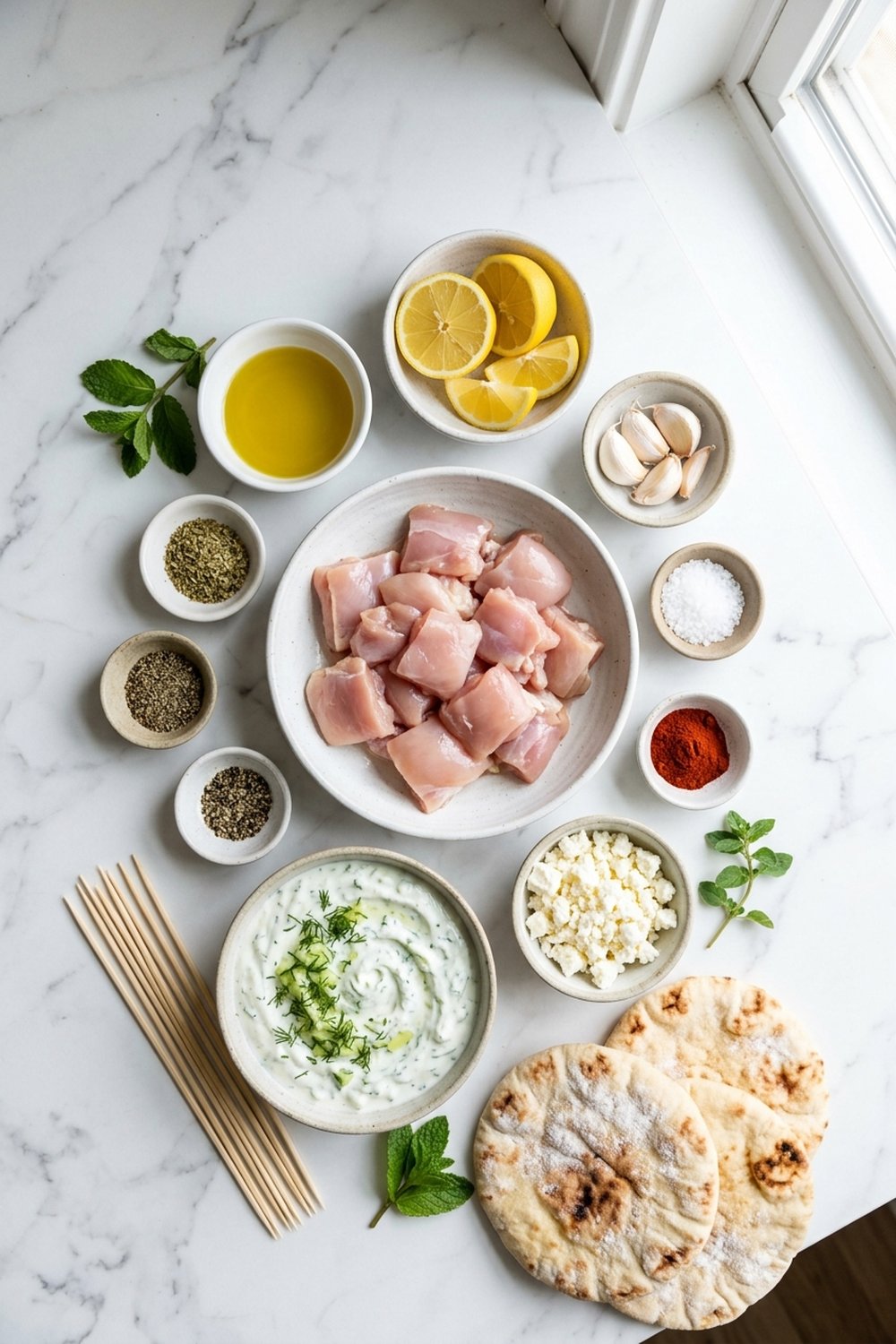
Ingredients
Greek Chicken Souvlaki Skewers (Kotopoulo Souvlaki)
- 2 lbs boneless skinless chicken thighs, cut into 1 inch cubes
- 1/3 cup olive oil
- 1/4 cup lemon juice, about 2 lemons
- 6 cloves garlic, minced
- 2 tbsp dried oregano
- 1 tbsp red wine vinegar
- 1.5 tsp kosher salt
- 1 tsp black pepper
- 1/2 tsp smoked paprika
- 1 cup tzatziki sauce, for serving
- 1/2 cup crumbled feta
- 4 pita breads, warmed
- 1 lemon, cut into wedges
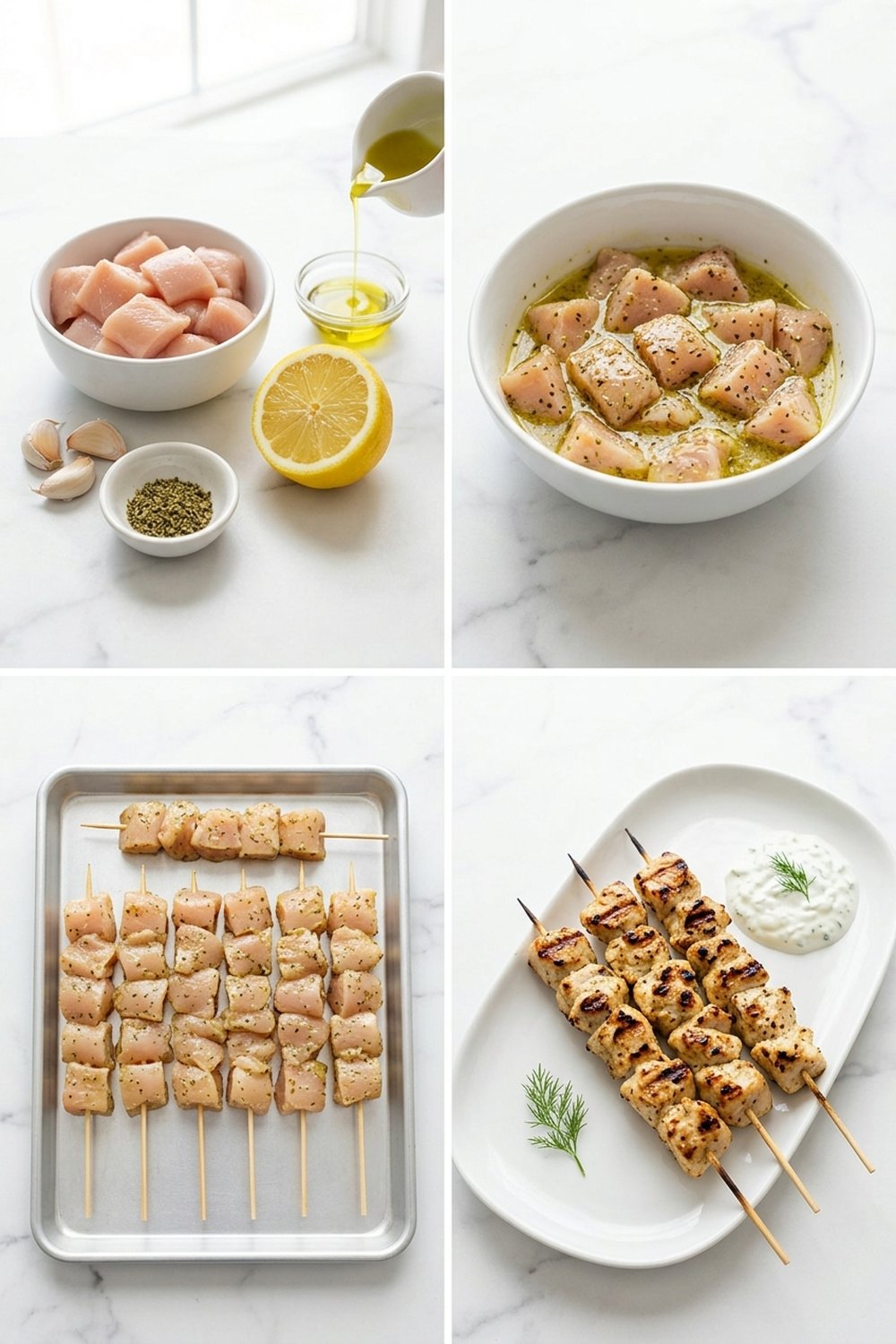
How to Make Greek Chicken Souvlaki Skewers (Kotopoulo Souvlaki)
- **Marinate.** In a large bowl whisk olive oil, lemon juice, garlic, oregano, vinegar, salt, pepper, and paprika. Add chicken cubes. Toss. Cover and refrigerate 30 minutes to 4 hours.
- **Soak.** If using wooden skewers, soak in water 30 minutes.
- **Thread.** Thread chicken cubes onto skewers, leaving small gaps between pieces.
- **Grill.** Preheat grill to high. Grill skewers 3 to 4 minutes per side, turning to char all 4 sides, until internal temp reaches 165F.
- **Rest.** Transfer to a platter. Rest 5 minutes.
- **Serve.** Serve with tzatziki, crumbled feta, warm pita, and lemon wedges.
Why This Recipe Works
6 oz cubed chicken thighs deliver 40g of protein, 1/4 cup tzatziki adds 4g, and a sprinkle of feta adds 1g. Each plate lands at 45g protein in a lean package.
Marinating chicken in a lemon oregano mix for 30 minutes (up to 4 hours) tenderizes and flavors every inch. The acid in lemon breaks down muscle fiber just enough to turn chicken breasts or thighs into pillow soft bites.
Using boneless skinless chicken thighs instead of breasts prevents dryness on the grill. Thighs have enough connective tissue to stay juicy even if you push past the 160F mark by mistake. For more ideas, see our Ground Turkey Sweet Potato Skillet.
Tips
- Use boneless skinless chicken thighs for juicier souvlaki.
- Soak wooden skewers 30 minutes to prevent burning.
- Cube chicken to 1 inch pieces for even cooking.
- Marinate at least 30 minutes, up to 4 hours max.
- Let skewers rest 5 minutes before serving.
- Use high heat on the grill for char marks.
Variations
- Swap chicken thighs for chicken breasts (reduce marinade time to 1 hour).
- Add cherry tomatoes and red onion between chicken cubes.
- Use pork tenderloin or lamb instead of chicken.
- Grill on a stovetop grill pan if no outdoor grill.
- Serve in a pita wrap with tzatziki and veggies.
- Make it keto with cauliflower rice instead of pita.
Looking for more high protein dinner ideas? Try our Cottage Cheese Breakfast Bowl or Buffalo Chicken Pasta Bake next.
Common Mistakes to Avoid
- Using chicken breast: Thighs are forgiving. Breast goes dry on the grill.
- Skipping the marinate: 30 minutes minimum. The lemon tenderizes and flavors.
- Over marinating: Max 4 hours. Longer and chicken turns mushy from acid.
- Cold grill: High heat is non negotiable. A cool grill steams, not chars.
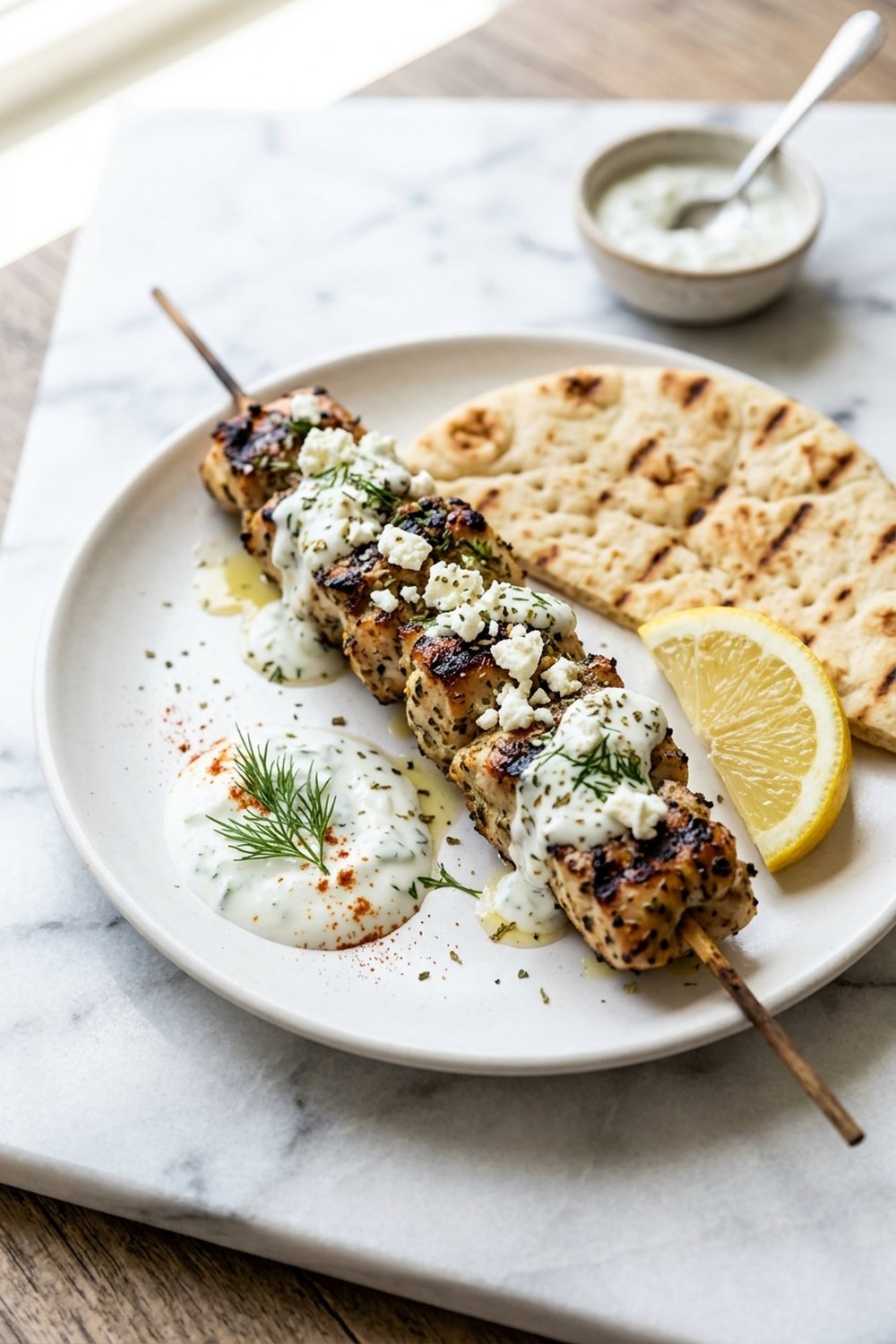
Greek Chicken Souvlaki Skewers (Kotopoulo Souvlaki)
Ingredients
Method
- **Marinate.** In a large bowl whisk olive oil, lemon juice, garlic, oregano, vinegar, salt, pepper, and paprika. Add chicken cubes. Toss. Cover and refrigerate 30 minutes to 4 hours.
- **Soak.** If using wooden skewers, soak in water 30 minutes.
- **Thread.** Thread chicken cubes onto skewers, leaving small gaps between pieces.
- **Grill.** Preheat grill to high. Grill skewers 3 to 4 minutes per side, turning to char all 4 sides, until internal temp reaches 165F.
- **Rest.** Transfer to a platter. Rest 5 minutes.
- **Serve.** Serve with tzatziki, crumbled feta, warm pita, and lemon wedges.
Notes
Sources: USDA FoodData Central for protein and nutrition data and Harvard T.H. Chan School of Public Health on protein requirements.