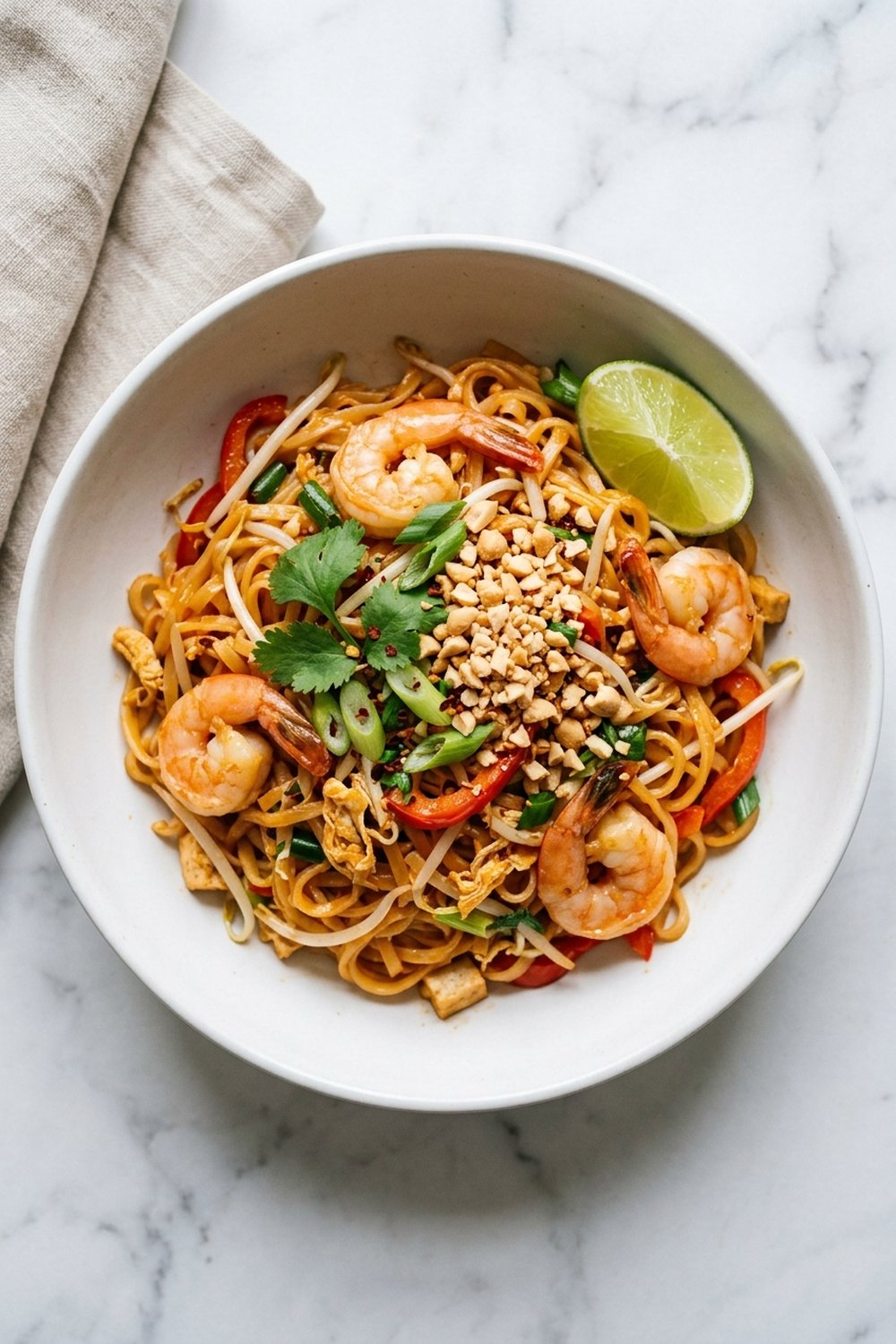
Glossy rice noodles, crisp bean sprouts, tender shrimp, and a bright tamarind sauce that tastes exactly like the takeout you love. ♡
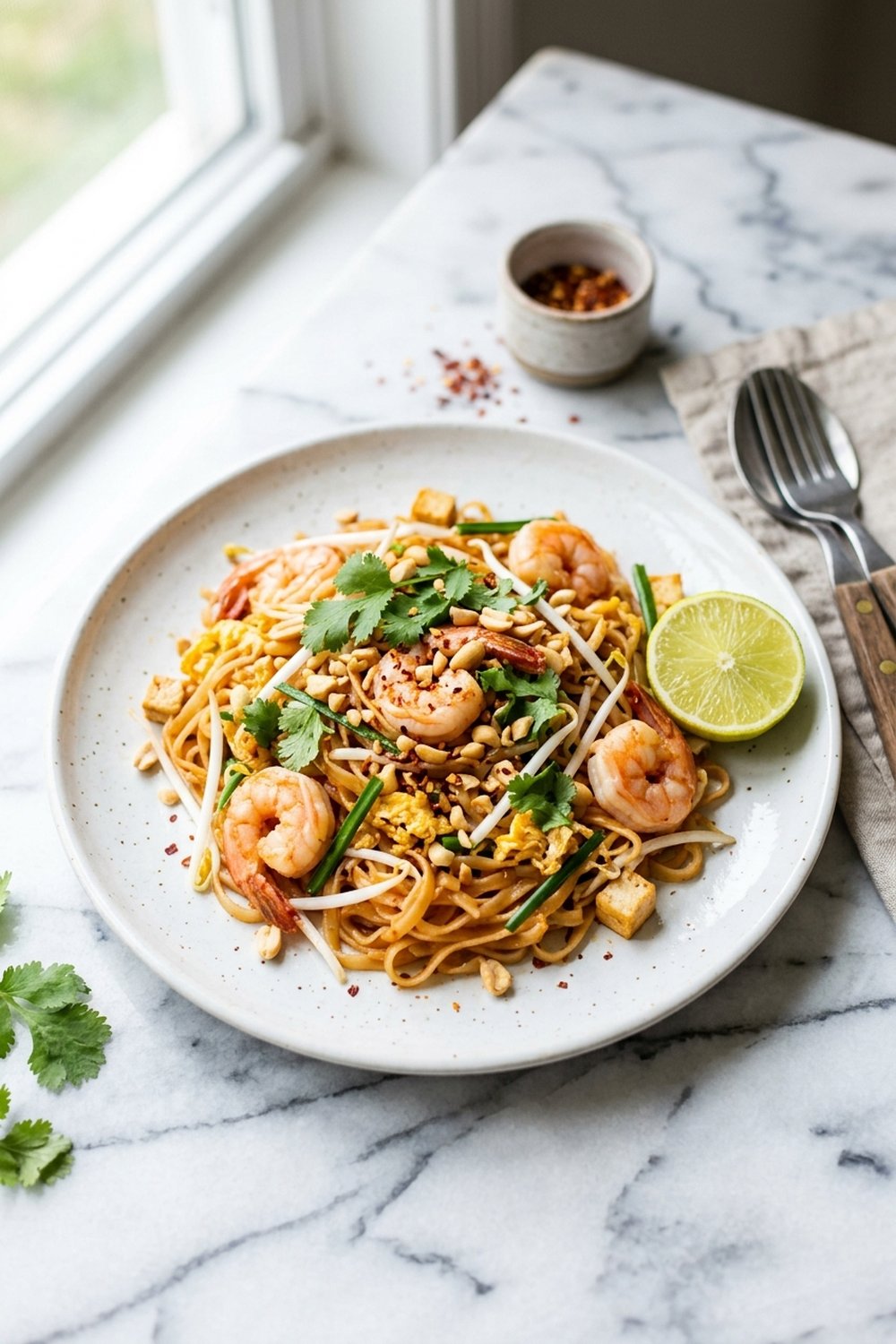
This healthy pad thai with rice noodles is the lightened up version of your favorite Thai takeout, and honestly it might be better than the restaurant one. We skip the deep fryer, cut the sugar in half, load it with fresh vegetables and lean protein, and still end up with noodles that are glossy, savory, tangy, and just a little sweet. One pan, 30 minutes, real ingredients.
If you have ever been nervous about cooking Thai food at home, this is the recipe that fixes that. The sauce comes together in one bowl, the noodles soak while you prep, and the stir fry itself takes about six minutes. Let’s make it together.
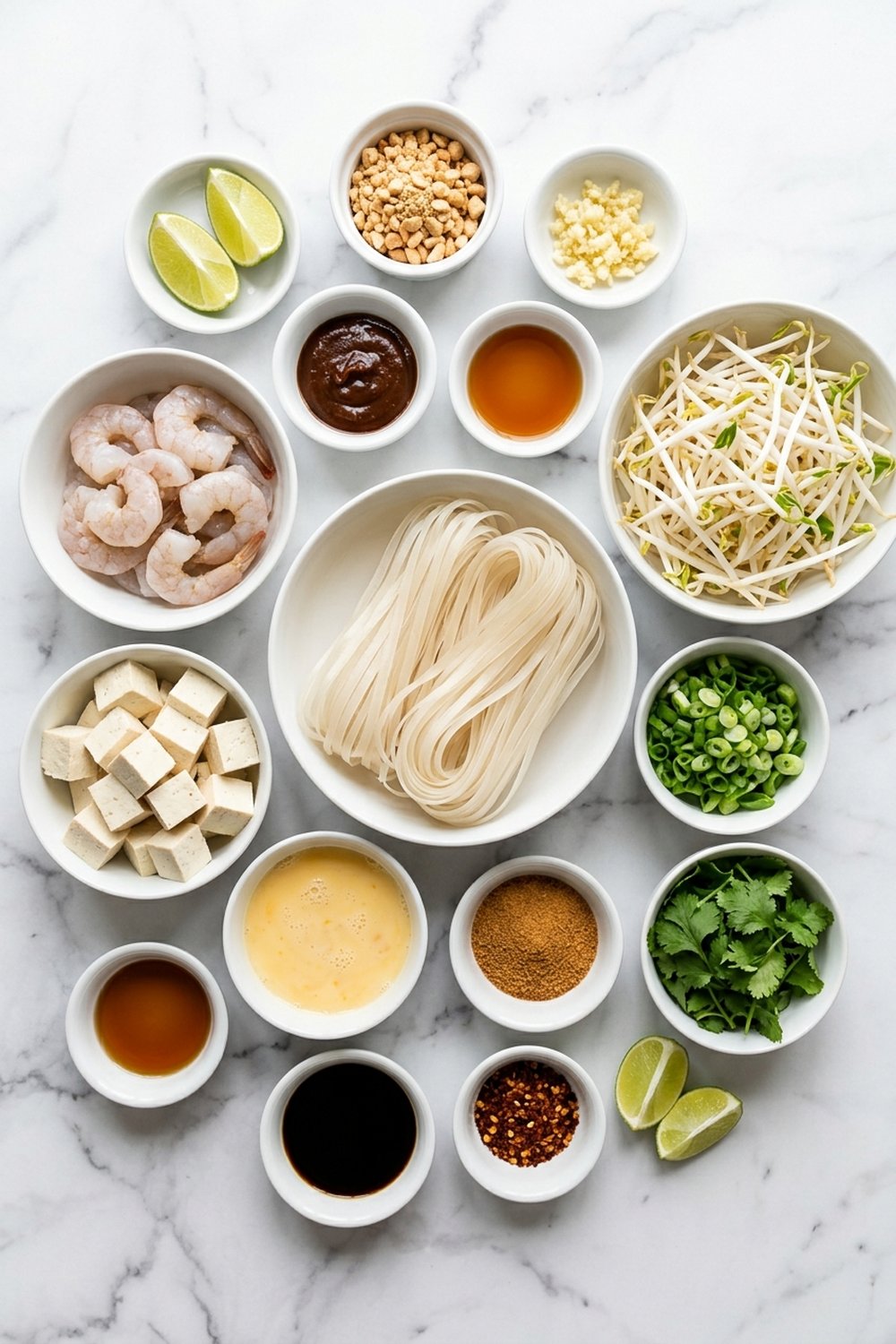
Ingredients
Healthy Pad Thai with Rice Noodles
- 8 oz flat rice noodles (pad thai style, about 1/4 inch wide)
- 1 lb raw shrimp, peeled and deveined
- 6 oz extra firm tofu, cubed
- 2 large eggs, whisked
- 3 cloves garlic, minced
- 2 cups fresh bean sprouts
- 4 green onions, sliced, white and green parts separated
- 1/3 cup roasted peanuts, roughly crushed
- 1 lime, cut into wedges
- 1/3 cup fresh cilantro leaves
- 2 tbsp avocado oil or neutral oil
For the pad thai sauce
- 3 tbsp tamarind paste
- 2 tbsp fish sauce
- 2 tbsp low sodium soy sauce
- 2 tbsp coconut sugar or brown sugar
- 1 tsp rice vinegar
- 1/2 tsp red pepper flakes (optional)
Optional add-ins
- shredded carrots
- sliced red bell pepper
- baby bok choy
- extra chili crisp for serving
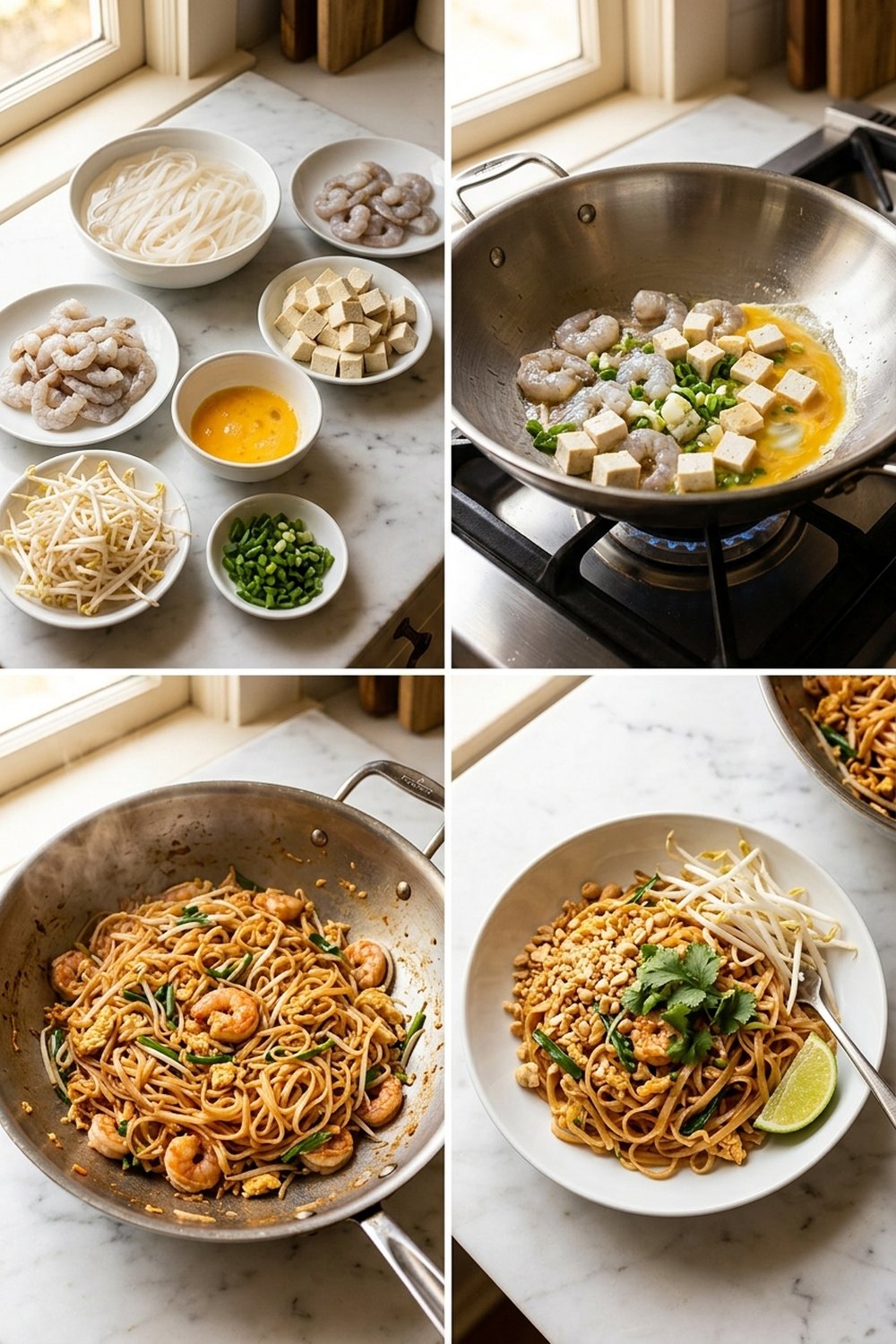
How to Make Healthy Pad Thai with Rice Noodles
- Soak. Place the dry rice noodles in a large bowl and cover with very hot tap water. Let them sit for 8 to 10 minutes until flexible but still firm in the center. Drain and set aside so they do not overcook.
- Mix. Whisk the tamarind paste, fish sauce, soy sauce, coconut sugar, rice vinegar, and red pepper flakes in a small bowl until the sugar dissolves. Give it a taste. It should read tangy first, then salty, then sweet.
- Sear. Heat 1 tablespoon oil in a large wok or stainless skillet over medium-high heat. Add the tofu and cook 3 to 4 minutes, turning until golden on two sides. Move to a plate.
- Cook. Add the remaining oil, then the garlic and white parts of the green onion. Stir for 15 seconds until fragrant. Add the shrimp and cook 2 minutes until just pink, then push everything to one side of the pan.
- Scramble. Pour the whisked egg into the empty side of the pan. Let it set for 20 seconds, then scramble into loose curds.
- Toss. Add the drained noodles, tofu, and sauce. Toss constantly with tongs for 2 minutes until the noodles soak up the sauce and turn glossy. They finish cooking right here.
- Finish. Kill the heat, add the bean sprouts, green onion tops, and half the peanuts. Toss once. Serve with lime wedges, cilantro, and the rest of the peanuts on top.
Why This Recipe Works
Restaurant pad thai leans heavy on oil and sugar because volume cooking on a screaming hot wok needs that coating to keep the rice noodles from sticking. In a home pan you do not need anything close to that much, which is why this lightened up pad thai still tastes right with about half the oil and sugar most recipes use. The trade-off is timing. Soaked noodles go into the pan already soft, and they finish cooking in the sauce itself, so every strand pulls in flavor rather than just getting coated.
The sauce is the other non-negotiable. Real tamarind paste, not ketchup, not peanut butter, is what gives pad thai that sour-funky backbone that balances the sweetness. Fish sauce adds salt and savory depth, soy sauce backs it up without pushing the sodium too high, and coconut sugar rounds everything out with a slightly caramel note. Hit all four flavors (salty, sour, sweet, umami) and you land on authentic pad thai even without a restaurant burner.
Shrimp and tofu together keep the protein high without leaning on meat. One serving comes in at 32 grams of protein, which is more than most takeout portions deliver in the same volume of noodles. If you have been searching for an easy pad thai recipe that is actually filling, this is it.
Tips
- Do not boil the noodles. Rice noodles soaked in hot tap water stay firm and finish in the pan. Boiled noodles turn mushy and clumpy within minutes.
- Use a wide pan. A 12 inch skillet or carbon steel wok gives the noodles room to fry rather than steam. A crowded pan makes everything gummy.
- Substitute tamarind. If you cannot find tamarind paste, swap in 2 tbsp lime juice plus 1 tbsp rice vinegar. The sauce reads slightly brighter but still balanced.
- Storage. Leftovers keep in an airtight glass container in the fridge for up to 3 days. The noodles firm up when cold, that is normal.
- Reheating. Add a splash of water to a skillet over medium heat and toss the noodles 2 to 3 minutes until loose and hot. The microwave dries them out.
- Meal prep. Portion cooled pad thai into four glass containers and refrigerate. Keep the peanuts, bean sprouts, and lime wedges in a separate container and add fresh when you reheat so the texture stays right.
- Common mistake to avoid. Do not skip the bean sprouts at the end off heat. They should stay crunchy, not wilted.
Variations
- Chicken pad thai. Swap the shrimp for 1 lb sliced chicken thigh and cook 4 to 5 minutes in step 4.
- Vegetarian pad thai. Double the tofu to 12 oz, skip the shrimp, and use soy sauce in place of fish sauce.
- Extra spicy. Stir 1 tbsp sambal oelek or chili crisp into the sauce.
- Peanut free. Use crushed roasted cashews or toasted sunflower seeds on top.
- Low carb pad thai. Swap half the rice noodles for spiralized zucchini or shirataki noodles added in the last minute of cooking.
- Pad see ew style. Use wide rice noodles, add 2 cups chopped Chinese broccoli, and bump the soy sauce to 3 tbsp.
Common Mistakes to Avoid
- Overcooking the noodles. If you boil rice noodles or soak them in boiling water, they turn to mush the moment they hit the pan. Hot tap water only, then straight into the stir fry.
- Adding bean sprouts too early. Bean sprouts cook in seconds. Toss them in off heat so they stay crisp against the soft noodles.
- Skipping the sauce taste. Tamarind paste brands vary in sourness. Always taste the sauce before it hits the pan and adjust sugar or lime so you hit all four flavors.
- Crowding the pan. If you double the recipe, cook it in two batches. A packed pan steams the noodles and the sauce never reduces to that glossy coating.
- Forgetting the lime. Fresh lime at the table is not a garnish, it is the final seasoning. Squeeze it on right before eating.
If you love this one, you will also love my Asian sesame noodle salad for a cold noodle version, my soy glazed salmon for another easy Asian dinner, and my baked feta with zucchini noodles when you want a low carb twist. For more comforting noodle dishes, try my garlic butter pasta.
Healthy Pad Thai with Rice Noodles
Ingredients
Method
- Place dry rice noodles in a large bowl and cover with very hot tap water. Soak 8 to 10 minutes until flexible but still firm in the center. Drain and set aside.
- Whisk tamarind paste, fish sauce, soy sauce, coconut sugar, rice vinegar, and red pepper flakes until sugar dissolves. Taste; it should be tangy, salty, then sweet.
- Heat 1 tbsp oil in a large wok or stainless skillet over medium-high heat. Add tofu and cook 3 to 4 minutes, turning until golden. Transfer to a plate.
- Add remaining oil, then garlic and white parts of green onion. Stir 15 seconds. Add shrimp and cook 2 minutes until just pink. Push to one side of the pan.
- Pour whisked egg into the empty side of the pan. Let set 20 seconds, then scramble into loose curds.
- Add drained noodles, tofu, and sauce. Toss constantly with tongs for 2 minutes until the noodles turn glossy and absorb the sauce.
- Kill the heat. Add bean sprouts, green onion tops, and half the peanuts. Toss once. Serve with lime wedges, cilantro, and remaining peanuts on top.