Spicy gochujang noodles with a sticky sweet heat sauce and chewy noodles in 15 minutes flat. ♡
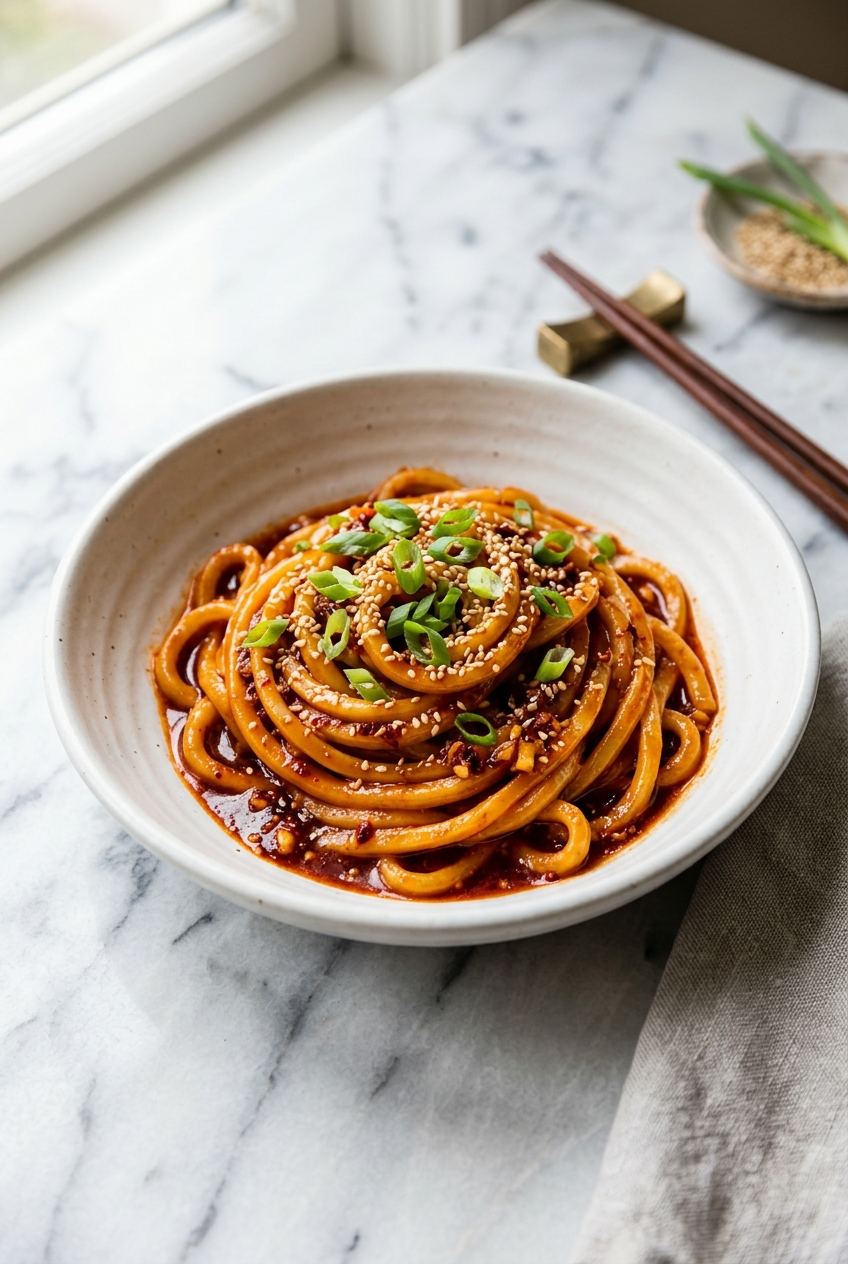
These viral spicy gochujang noodles took over TikTok for a reason. A 4 ingredient gochujang butter sauce coats every chewy noodle in sticky sweet heat, and the whole bowl comes together in the same 8 minutes the noodles take to boil. For more ideas, see our Air Fryer Korean Fried Chicken.
TikTok famous for a reason and somehow even better at home. Let’s make it together.
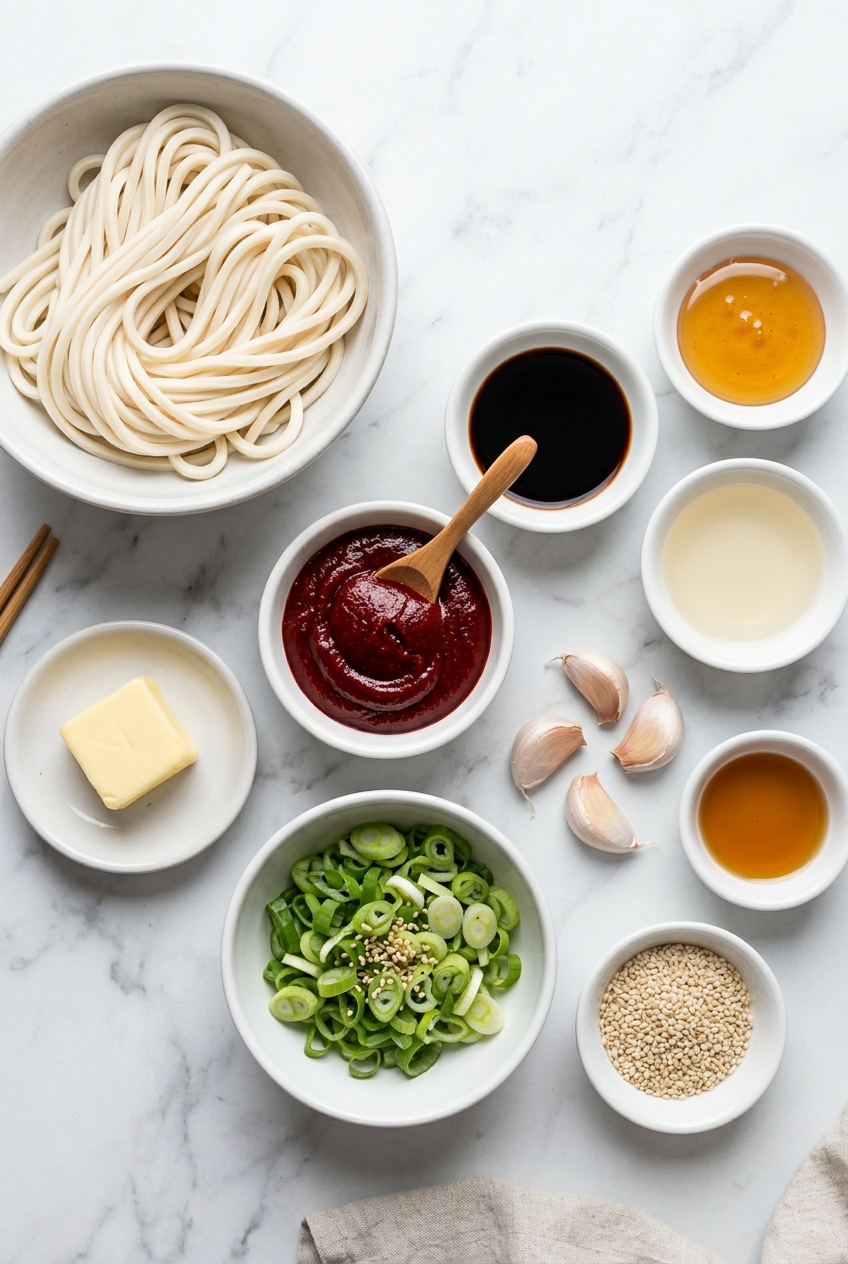
Ingredients
Spicy Gochujang Noodles
- 8 oz udon, ramen, or fresh chow mein noodles
- 3 tbsp unsalted butter
- 3 tbsp gochujang
- 2 tbsp soy sauce
- 1 tbsp honey
- 1 tsp rice vinegar
- 3 cloves garlic, minced
- 1 tsp toasted sesame oil
- 2 tbsp sliced scallions, for garnish
- 1 tbsp toasted sesame seeds, for garnish
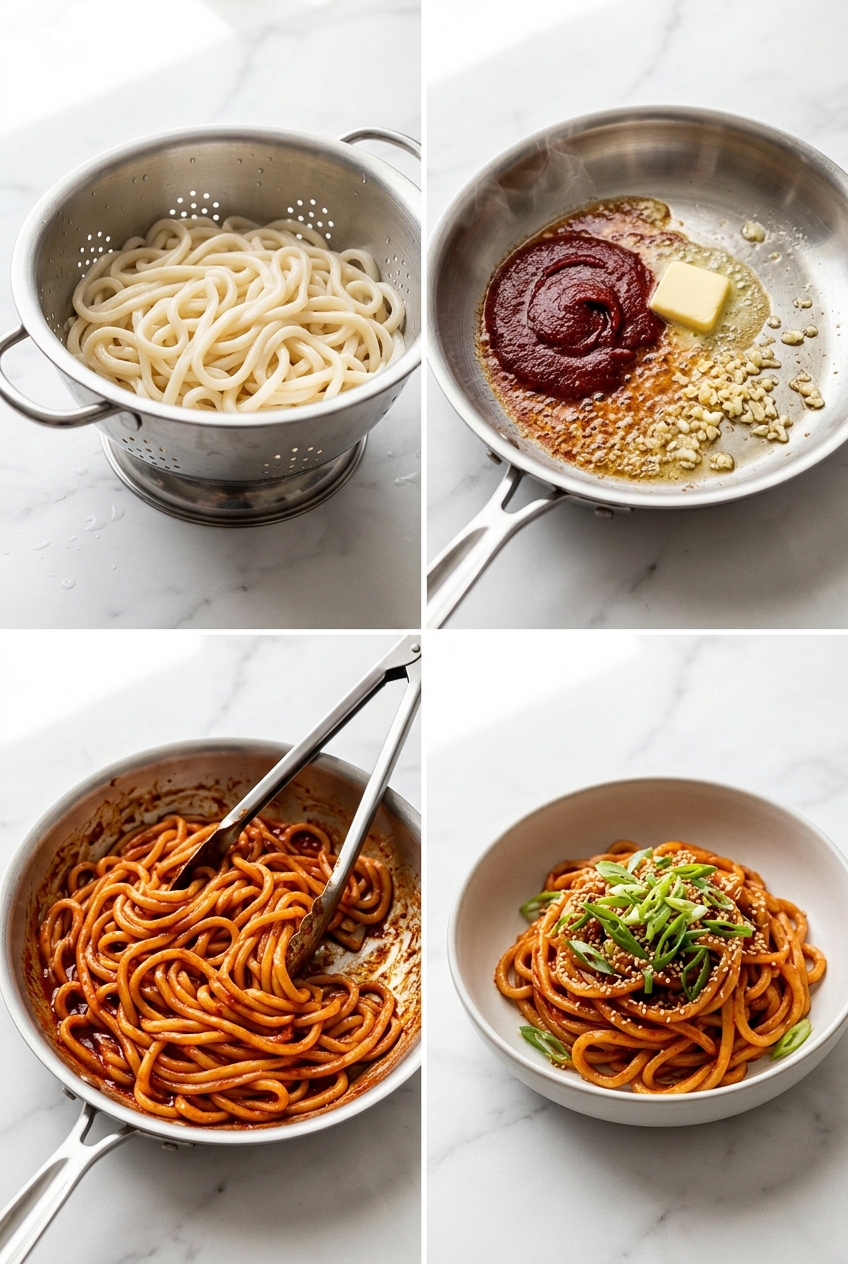
How to Make Spicy Gochujang Noodles
- **Boil.** Cook noodles in salted water according to package directions. Reserve 1 cup pasta water and drain.
- **Bloom.** Melt butter in a large skillet over medium heat. Add garlic and gochujang. Stir 30 seconds until fragrant and slightly toasted.
- **Whisk.** Add soy sauce, honey, rice vinegar, and 1/4 cup pasta water. Whisk until glossy and emulsified.
- **Toss.** Add cooked noodles to the pan. Toss to coat, splashing in more pasta water 1 tablespoon at a time until silky.
- **Finish.** Drizzle with sesame oil and toss again. Top with scallions and sesame seeds.
- **Serve.** Plate immediately while the sauce is glossy and the noodles are hot.
Why This Recipe Works
Gochujang plus butter is the gimmick that made this recipe go viral, and it actually works. The fermented chili paste brings funky deep heat, and the butter emulsifies into a glossy sauce that clings to every noodle the way oil based dressings never do. Together they create a sticky cling factor that mimics restaurant dan dan noodles.
Using thick chewy noodles is the choice that separates good gochujang noodles from sad ones. Udon, ramen, or fresh egg noodles have the wide surface area and chew that bulky sauces grab onto. Skinny noodles get coated unevenly and slip out of the sauce on the way to your mouth.
Reserving pasta water and emulsifying it into the sauce is the chef move that takes this from 1 minute prep to actually delicious. The starch in the water binds the butter and gochujang into a glossy unbroken sauce, and adding it 1 tablespoon at a time gives you full control over the consistency. For more ideas, see our Blueberry Lemon Ricotta Pancakes.
Tips
- Use udon, ramen, or fresh chow mein noodles for the best chew.
- Reserve 1 cup pasta water before draining. Critical for sauce emulsification.
- Toast the gochujang in butter for 30 seconds before adding noodles to deepen the flavor.
- Store leftovers in an airtight container 3 days. Reheat with a splash of water.
- Add cooked protein like rotisserie chicken or crispy tofu to make it a full meal.
- Common mistake: do not skip the soy sauce. It balances the gochujang sweetness.
Variations
- Add 2 cups baby spinach in the last minute for greens.
- Top with a soft jammy egg for extra richness.
- Add 1 tbsp peanut butter to the sauce for nutty thai inspired noodles.
- Use rice noodles for a gluten free version.
- Top with crispy fried garlic for crunch.
- Make it sweeter with an extra tablespoon of honey or brown sugar.
Looking for more recipes? Try our Cajun Chicken Alfredo Pasta or Vegan Creamy Mushroom Soup next.
Common Mistakes to Avoid
- Skipping the pasta water: Starchy water is what emulsifies the sauce. Without it the butter and gochujang split.
- Using thin noodles: Skinny pasta does not hold thick sauce. Pick udon, ramen, or wide noodles.
- Burning the gochujang: Toast 30 seconds max in butter. Longer and the chili paste turns bitter.
- Over saucing: Add sauce gradually. Too much makes the noodles slick instead of glossy.
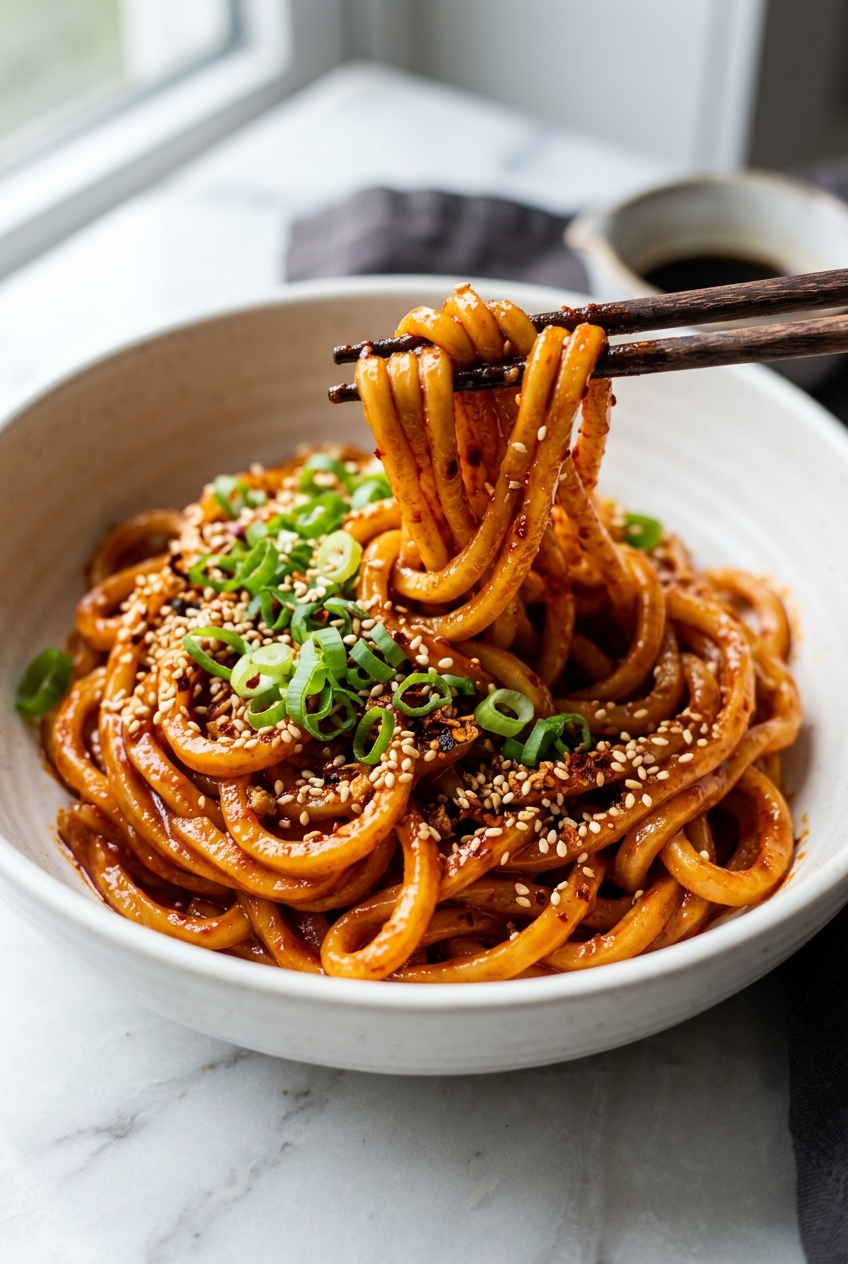
Spicy Gochujang Noodles
Ingredients
Method
- **Boil.** Cook noodles in salted water according to package directions. Reserve 1 cup pasta water and drain.
- **Bloom.** Melt butter in a large skillet over medium heat. Add garlic and gochujang. Stir 30 seconds until fragrant and slightly toasted.
- **Whisk.** Add soy sauce, honey, rice vinegar, and 1/4 cup pasta water. Whisk until glossy and emulsified.
- **Toss.** Add cooked noodles to the pan. Toss to coat, splashing in more pasta water 1 tablespoon at a time until silky.
- **Finish.** Drizzle with sesame oil and toss again. Top with scallions and sesame seeds.
- **Serve.** Plate immediately while the sauce is glossy and the noodles are hot.
Notes
Sources: USDA FoodData Central for nutrition data and Harvard T.H. Chan School of Public Health Nutrition Source.