This one pot pasta primavera comes together in a single pan with snap peas, asparagus, and cherry tomatoes tossed in a lemony parmesan sauce. ♡
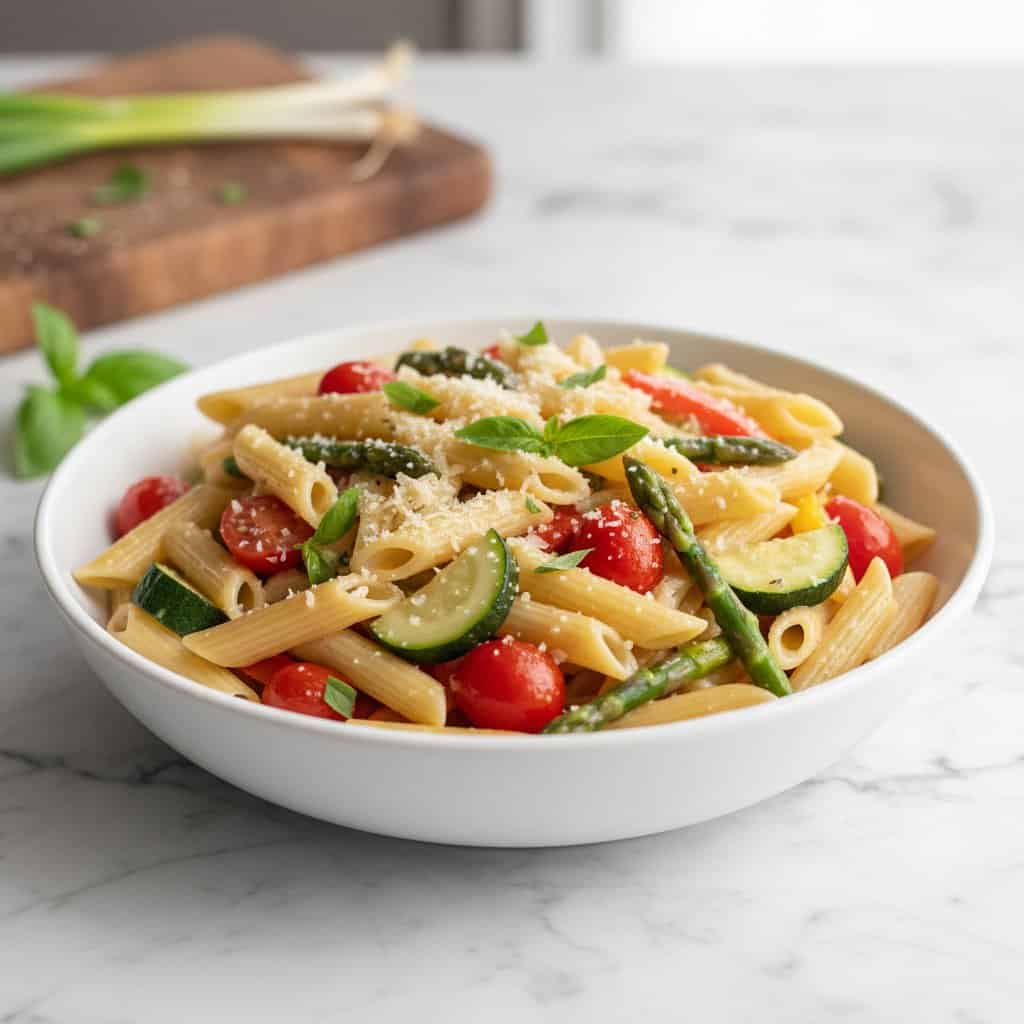
A real one pot pasta primavera cooks the pasta right in the sauce so the starch thickens everything into a silky glaze without cream. I start by sauteing garlic and shallot in olive oil, then add broth, the pasta, and the sturdiest vegetables first. Quick cooking greens go in at the very end so they stay bright and snappy instead of turning army green.
This is my go-to easy weeknight dinner when the fridge is full of random vegetables and I do not want to dirty three pans. The pasta, the sauce, and the vegetables all finish at the same time in one pan. Let’s make it together.
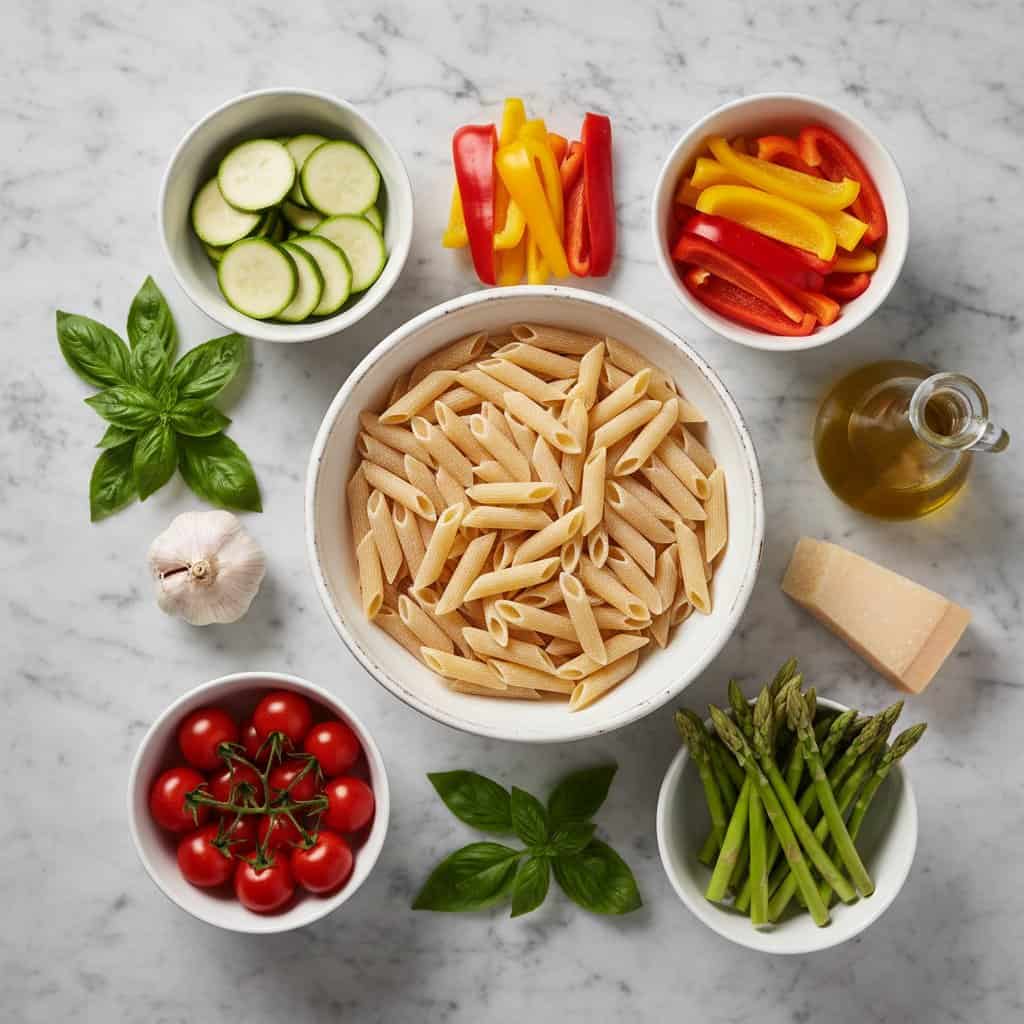
Ingredients
One Pot Pasta Primavera
- 12 oz short pasta like penne, rigatoni, or cavatappi
- 4 cups low sodium vegetable or chicken broth
- 2 tbsp olive oil
- 1 medium shallot, finely diced
- 4 cloves garlic, minced
- 1/2 tsp red pepper flakes
- 1 cup asparagus, cut into 1 inch pieces
- 1 cup sugar snap peas, strings removed
- 1 small zucchini, sliced into half moons
- 1 cup cherry tomatoes, halved
- 1/2 cup frozen peas
- 1 cup baby spinach, packed
- 1/2 cup grated parmesan cheese, plus more to serve
- 2 tbsp fresh lemon juice
- 1 tsp lemon zest
- 1/4 cup fresh basil, torn
- 1 tsp kosher salt
- 1/2 tsp black pepper
Optional add-ins:
- Grilled chicken or shrimp
- Toasted pine nuts
- Crumbled goat cheese
- Fresh mint or dill
- A splash of heavy cream at the end
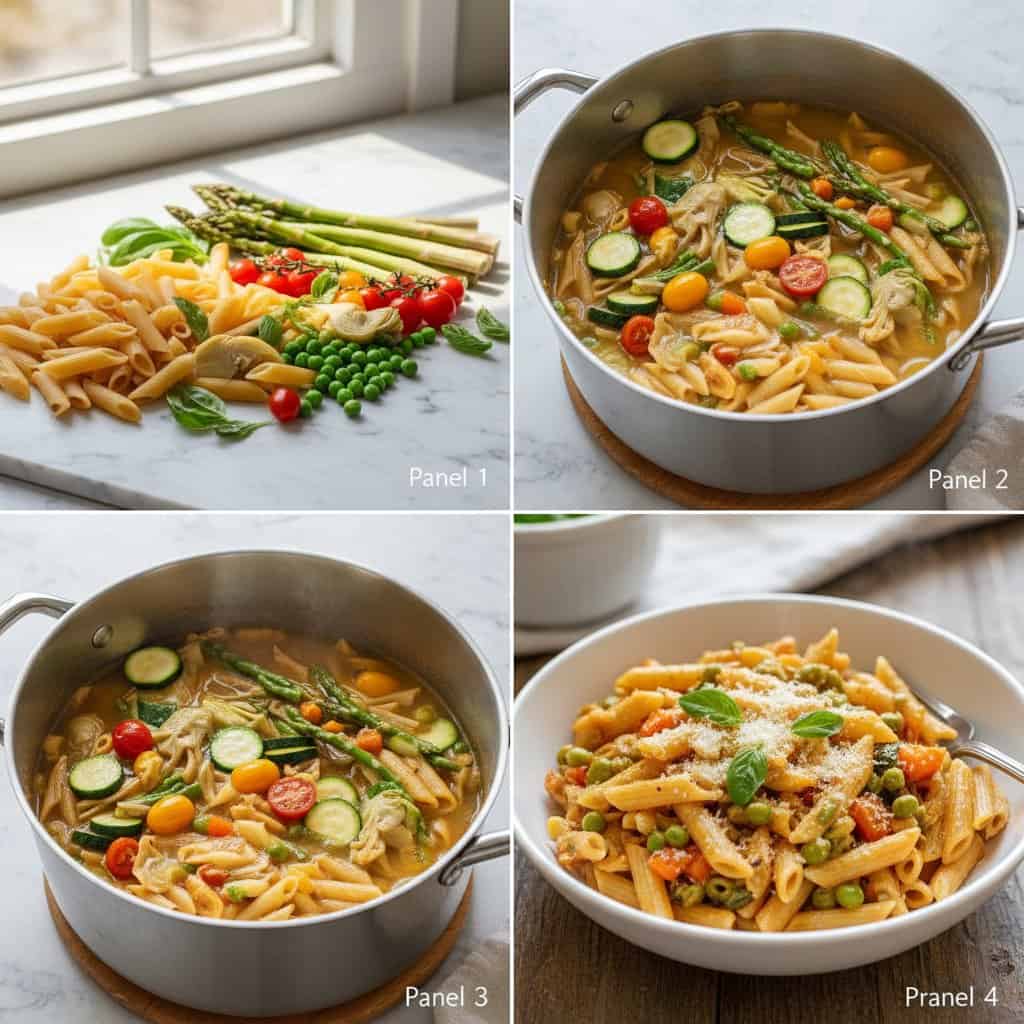
How to Make One Pot Pasta Primavera
- Saute. Heat olive oil in a large deep skillet or Dutch oven over medium heat. Add the shallot and cook 2 minutes, then add the garlic and red pepper flakes and cook 30 seconds until fragrant. Do not brown the garlic or it turns bitter.
- Simmer. Pour in the broth and bring to a strong simmer. Add the pasta, salt, and pepper. Stir once so nothing sticks, then cook uncovered for 6 minutes, stirring every 2 minutes to keep the pasta moving.
- Add sturdy vegetables. Drop in the asparagus, snap peas, and zucchini. Keep simmering uncovered for 3 more minutes. The pasta will be almost al dente at this point.
- Finish. Add cherry tomatoes, frozen peas, and spinach. Stir and cook 2 more minutes until the spinach wilts and the pasta is just tender. There should still be a few tablespoons of liquid in the pan. That becomes the sauce.
- Cream up. Off the heat stir in the parmesan, lemon juice, and lemon zest. The cheese melts into the pasta water and turns it glossy. If it looks dry splash in a little hot broth.
- Serve. Scatter fresh basil over the top. Serve immediately with extra parmesan and a grind of black pepper.
Why This Recipe Works
Cooking the pasta directly in broth is the secret to a creamy one pot pasta primavera with zero heavy cream. As the pasta cooks it releases starch into the liquid, and that starch is what thickens the broth into a glossy sauce when you finish with cheese and lemon. Boiling the pasta separately in a big pot of water and draining it washes all that starch down the sink.
Adding the vegetables in stages is the part most quick pasta primavera recipes get wrong. Asparagus and snap peas need 3 to 4 minutes to cook through, but spinach and tomatoes only need a minute or two or they fall apart. Staggering them means everything finishes at the same time with each vegetable at its best texture.
Finishing off the heat with parmesan and lemon zest keeps the cheese from clumping and locks in that bright citrus aroma. Parmesan cheese seized over direct heat turns stringy and gummy. The lemon juice also balances the richness of the cheese so the whole dish tastes lighter, not heavier, even without cream (see the USDA note on pasta nutrition).
Tips
- Store leftovers in an airtight container in the fridge for up to 3 days. The pasta will soak up the sauce as it sits so leftovers feel drier than fresh.
- Reheat in a skillet over medium with a splash of broth or water, stirring gently until warm. Microwave works too: cover and heat in 30 second bursts with a drizzle of olive oil on top.
- For meal prep, undercook the pasta by 1 minute so it holds up when reheated later in the week.
- Use a wide deep pan, not a narrow pot. The pasta needs surface area to cook evenly in that small amount of broth.
- Stir frequently. Unlike regular pasta water, this starchy broth sticks to the bottom of the pan if it is left alone for too long.
- Common mistake: using too little broth. You need a 1:3 ratio of dry pasta to liquid minimum, or the pasta ends up chalky.
- Gluten free? Swap in chickpea pasta and reduce the simmer time by 2 minutes so it does not turn mushy.
Variations
- Creamy primavera: stir in 1/4 cup heavy cream or half and half with the parmesan for a richer sauce.
- Chicken pasta primavera: add 2 cups diced cooked chicken when you add the spinach.
- Shrimp primavera: toss in 1 lb raw shrimp with the tomatoes so they cook through in the last 3 minutes.
- Pesto primavera: skip the parmesan and lemon and stir 1/3 cup basil pesto in off the heat.
- Spring primavera: swap zucchini for 1 cup fresh fava beans or chopped artichoke hearts.
- Summer primavera: add 1 cup corn kernels and swap basil for fresh mint.
Common Mistakes to Avoid
- Adding all the vegetables at once. The delicate greens overcook while the asparagus stays raw. Fix: follow the staggered order in step 3 and 4.
- Not stirring often enough. Starchy pasta water scorches on the bottom. Fix: stir every 2 minutes during the simmer.
- Using fat free broth. It tastes watered down. Fix: use full flavor low sodium broth so you control the salt but keep the body.
- Adding cheese over high heat. It clumps and turns gritty. Fix: always remove the pan from the heat first.
- Overcooking the pasta. It keeps absorbing liquid after the heat is off. Fix: pull it when it still has a slight bite.
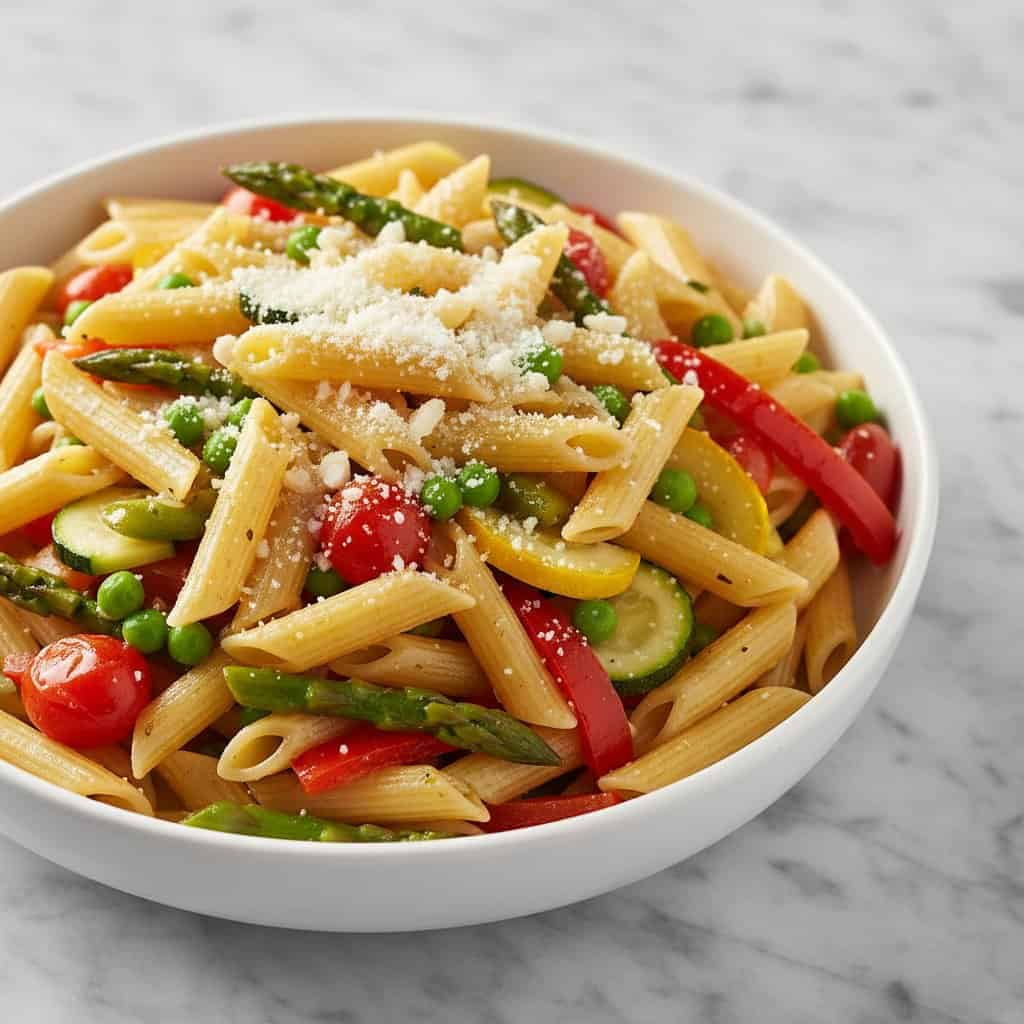
One Pot Pasta Primavera
Ingredients
Method
- Add uncooked pasta, onion, garlic, cherry tomatoes, broccoli, bell pepper, olive oil, Italian seasoning, red pepper flakes, broth, and water to a large wide pot. Everything goes in cold.
- Bring to a full rolling boil over medium-high heat, stirring frequently. Reduce to a strong simmer and cook for 9 to 11 minutes, tossing with tongs every couple of minutes.
- Add zucchini slices in the last 3 minutes of cooking. Stir to combine.
- Remove from heat when pasta is al dente and a small amount of starchy liquid remains. Stir in Parmesan until melted and sauce coats the pasta.
- Season with salt and black pepper to taste. Serve immediately topped with fresh basil and extra Parmesan.
Notes
Looking for more one pot dinners? Try my chicken tortilla soup, stuffed shells with ricotta, one pan lemon herb salmon, or a comforting loaded baked potato soup. For food safety on cooked pasta leftovers see the FDA safe food handling guide.